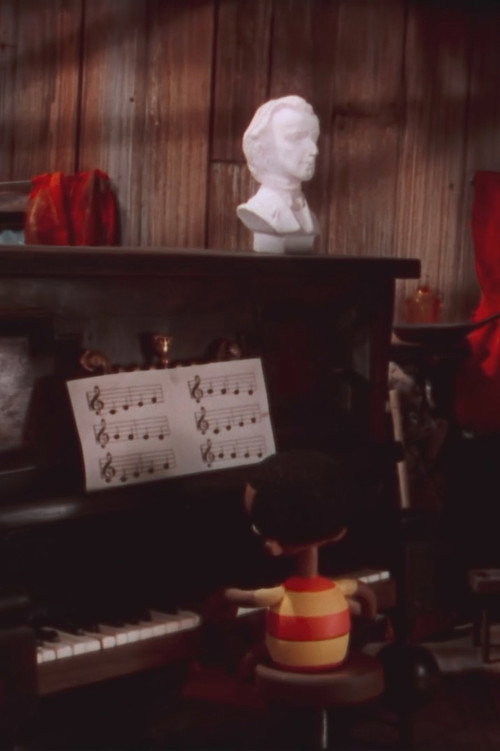
Jasper's Music Lesson
1943
No user ratings available yet
Representation score: 2.8 out of 10
Representation Score
Good
1959
Director
Ernest Pintoff
Runtime
8 minutes
Average Rating
No ratings yetNew Showbiz Analysis
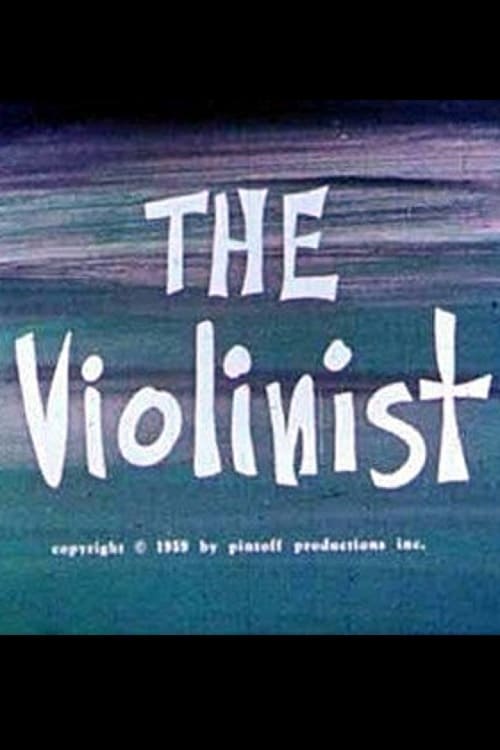
The film 'The Violinist' is a character study that emphasizes psychological depth rather than broad demographic representation. While it does not explicitly address multi-layered issues, it successfully explores internal character states and the tension between technical skill and emotional authenticity. The film's strength lies in its humanistic approach to achievement. By questioning rigid, traditional standards of mastery, it creates a narrative that values subjective experiences over institutional norms. However, the work is limited by its time period. It lacks visible representation across various identity categories, functioning more as a minimalist psychological study than a diverse social tapestry.
Category Breakdown
The film does not provide any direct information about sexual orientation or gender identity. The story focuses solely on the protagonist's relationship with his music.
The story revolves around a single male protagonist named Harry. There are no secondary characters or specific gender power dynamics in the narrative.
The film likely mirrors the demographic uniformity of 1959. There is no indication of a diverse cast or symbolic representations of ethnic diversity.
The narrative challenges traditional meritocracy by emphasizing emotional truth over technical precision. This shift towards subjective morality suggests a less dogmatic perspective.
Harry's struggle with emotional detachment can be seen as a portrayal of neurodivergence. The film delves into this internal variation through his journey towards self-realization.
Present on Screen
Limited or Absent
Official Synopsis
Oscar-nominated animated short from 1959. Harry is a violinist who loves to play, but without feeling. When he is told that he plays terribly he tries to change how he plays, learning a very important lesson.
1943

1947
1947

1965
1952
1947
1963
1969
No reviews yet. Be the first to share your thoughts on this movie!
Use the rating form above to leave a star rating and optional review.