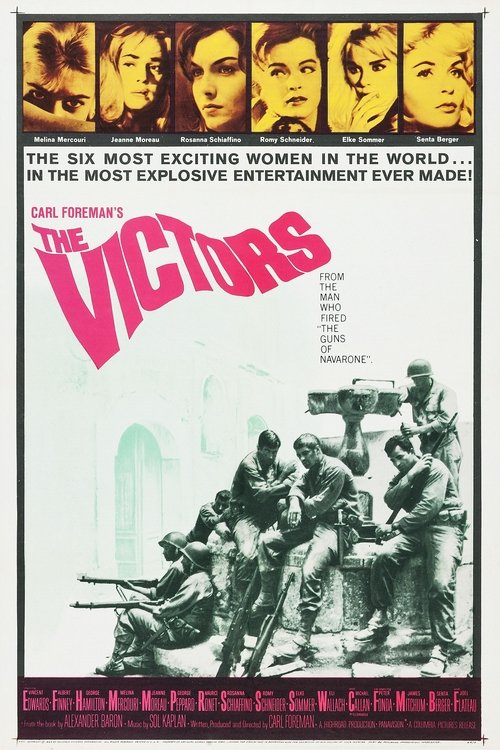
The Victors
1963
No user ratings available yet
Representation score: 1.6 out of 10

Representation Score
Minimal
1945
ApprovedDirector
William A. Wellman
Runtime
108 minutes
Average Rating
No ratings yetNew Showbiz Analysis
This wartime drama is a quintessential product of its era, prioritizing institutional loyalty and traditional narrative structures. It reinforces mid-century social norms by focusing on masculine camaraderie and patriotic duty rather than challenging existing hierarchies. The film's structure is built around the gender and racial compositions of 1945. It provides a portrait of military life that reflects the period's status quo, offering little room for diverse perspectives. Ultimately, the work functions as a traditionalist war narrative. It emphasizes duty and conventional heroism, adhering to the social constraints and institutional values of the Golden Age of Hollywood.
Category Breakdown
The film focuses on the bonds between soldiers and does not depict any non-straight or non-cisgender identities or same-sex relationships.
The movie centers on a hyper-masculine military environment where male combatants play a significant role. Women appear in supporting roles such as nurses or romantic interests.
The cast is mostly uniform, reflecting the historical composition of the 1945 US Army. It lacks significant racial or ethnic diversity among its main characters.
The film highlights military discipline and Western democratic ideals. It portrays the military structure as a stabilizing force without questioning religion or capitalism.
Physical and psychological trauma are used to emphasize the cost of war. These elements highlight the impact of war rather than providing characters with significant roles in the story.
Present on Screen
Limited or Absent
Official Synopsis
War correspondent Ernie Pyle joins Company C, 18th Infantry as this American army unit fights its way across North Africa in World War II. He comes to know the soldiers and finds much human interest material for his readers back in the States. Preserved by the Academy Film Archive in partnership with The Film Foundation in 2000.
1963

1942
1952
1946
1957
1958

1942
1962
No reviews yet. Be the first to share your thoughts on this movie!
Use the rating form above to leave a star rating and optional review.