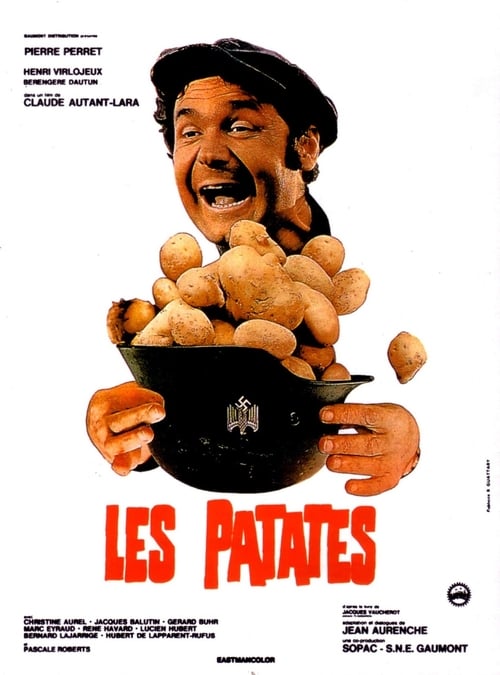
Potatoes
1969
No user ratings available yet
Representation score: 3.3 out of 10

Representation Score
Fair
1971
Director
Michel Boisrond
Runtime
77 minutes
Average Rating
No ratings yetNew Showbiz Analysis
The film operates as a character-driven farce that uses gendered tension to advance its plot. While it offers a modest subversion of power by highlighting a woman's influence within a male-dominated revolutionary group, the story remains rooted in traditional historical and conventions that assume everyone is straight. Its primary focus is on the interpersonal dynamics of a specific Irish historical moment. Due to its emphasis on situational irony and comedic conflict, it lacks the multi-layered complexity found in more progressive works.
Category Breakdown
The film centers on the conflict between revolutionaries and a female civilian. There are no representations of non-binary gender identities or same-sex relationships, indicating a traditional focus on straight relationships.
Gertie Gertel holds significant influence over seven armed men, shifting the narrative focus to her. This challenges the stereotype of women as passive observers, although the comedic nature might reinforce certain gendered expectations.
Set during the 1916 Irish revolution, the film reflects the homogeneous ethnic makeup of the time. It serves as a localized historical drama rather than a platform for diverse racial representation.
The plot explores the clash between colonial institutions and revolutionary movements. However, the comedic tone may downplay any deeper critique of imperialism or established Western power structures.
The film does not include any characters with visible or invisible disabilities. There is no exploration of neurodivergence or physical impairments.
Present on Screen
Limited or Absent
Official Synopsis
This French farce/drama takes place in Ireland in 1916, during one of the peak periods of revolutionary violence. Seven Irish revolutionaries have taken over a post office, totally evacuating the building. Or so they think. They missed Gertie Gertel, who was in the bathroom at the time. By the time she is discovered, they are sufficiently besieged that for her own safety, she must stay with them. Gertie, it turns out, is about as pro-British as it is possible to be, and the seven take it on themselves, in the midst of battles and gunfights, to win her over to their cause.
1969
1956

2006

1968
1973
1947

2000
2016
No reviews yet. Be the first to share your thoughts on this movie!
Use the rating form above to leave a star rating and optional review.