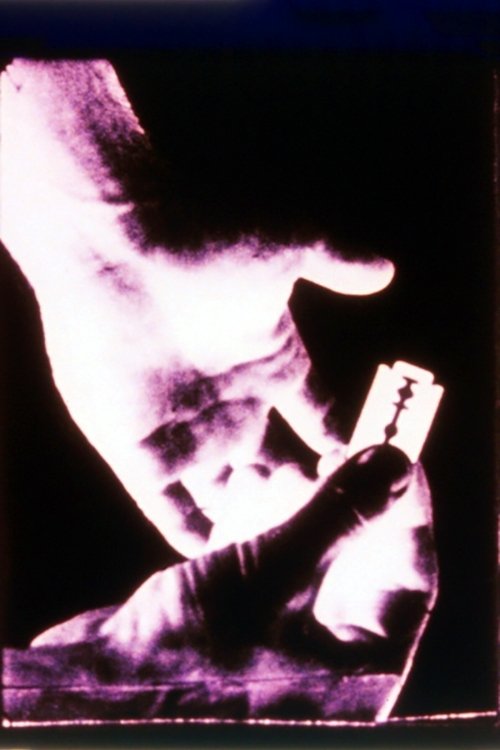
Razor Blades
1968
No user ratings available yet
Representation score: 0.6 out of 10
Representation Score
Minimal
1969
Not RatedDirector
Paul Sharits
Runtime
12 minutes
Average Rating
No ratings yetNew Showbiz Analysis
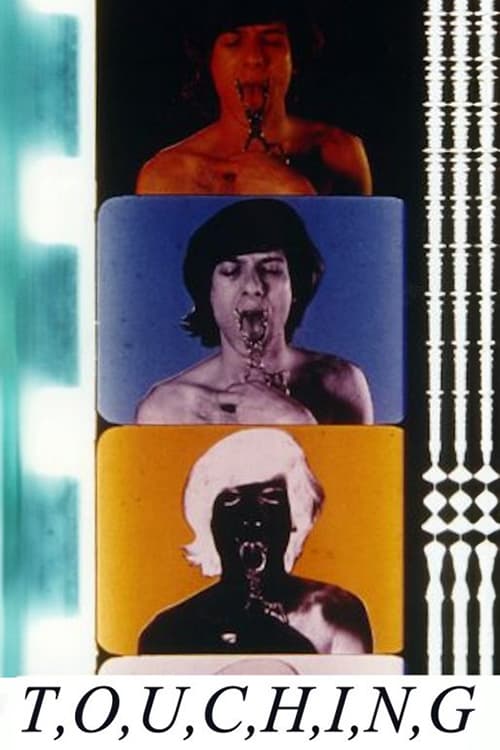
Paul Sharits' T,O,U,C,H,I,N,G is a structuralist experiment that prioritizes the deconstruction of the cinematic image over sociopolitical discourse. It operates through flickering frames, rhythmic editing, and abstract motifs like eye surgery and anatomical close-ups. Since the film lacks a narrative, characters, and dialogue, it cannot engage with identity-based representation. The work exists entirely outside the framework of social or cultural identity politics, focusing instead on sensory perception. While the film's radical formalist approach disrupts the standard grammar of Western cinema, it does not provide meaningful representation of any specific demographic group.
Category Breakdown
The film lacks characters, dialogue, or interpersonal relationships. As a non-narrative structuralist work, it has no capacity to depict sexual orientation or gender identity.
The film avoids character development and does not establish gendered personas. Close-up shots of anatomy exist, but they do not reinforce or challenge traditional gender roles.
Rapid-fire imagery and flickering editing prevent the establishment of specific racial or ethnic identities. The focus remains on the materiality of the film strip rather than social structures.
The work disrupts Western storytelling through rhythmic imagery and a looped soundtrack. However, it functions as a formalist exercise rather than a critique of social or religious institutions.
No characters are portrayed with physical or neurodivergent traits. The intense flickering effects are a sensory phenomenon of the medium rather than a narrative depiction of disability.
Present on Screen
Limited or Absent
Official Synopsis
T,O,U,C,H,I,N,G uses flickering frames of solid color juxtaposed with positive and negative still images of a man—sometimes cutting off his own tongue with glitter-covered scissors, sometimes suffering a series of glitter-stained fingernail scratches across the face. Other rapidly alternating still images of eye surgery and a couple in the midst of intercourse. The soundtrack is a continuous looped recording of the word "destroy" over the entire length of the film.
1968
1968
1964
1965

1971
1966
1985
1964
No reviews yet. Be the first to share your thoughts on this movie!
Use the rating form above to leave a star rating and optional review.