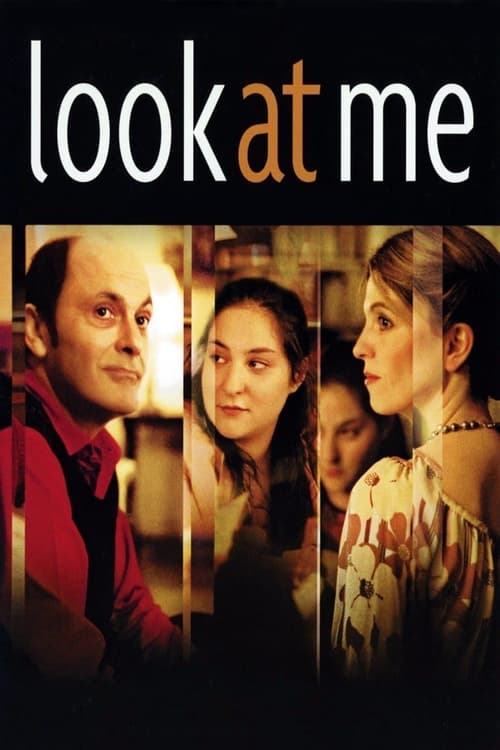
Look at Me
2004
No user ratings available yet
Representation score: 6.8 out of 10

Representation Score
Fair
2011
Not RatedDirector
Jennifer Devoldère
Runtime
98 minutes
Average Rating
No ratings yetNew Showbiz Analysis
The film succeeds in centering a female perspective, using Justine’s internal struggles and unconventional art to drive the plot. It effectively challenges the sanctity of the traditional Western family unit by exploring the resentment and self-doubt caused by domestic shifts. While the film offers nuanced ethnic specificity through its Jewish characters, it operates within a relatively conventional demographic framework. The lack of LGBTQ+ representation and diverse racial casting limits its broader inclusivity. Ultimately, the work is a character-driven exploration of identity that prioritizes psychological complexity over traditional social structures.
Category Breakdown
The film focuses on Justine's romantic pursuits and her father's domestic restructuring. There is no explicit depiction of LGBTQ+ identities or non-straight relationships.
The film centers on the female experience, emphasizing Justine's autonomy and psychological state. Male figures are portrayed through a lens that highlights women's ability to drive the story and emotional intelligence.
The inclusion of a Jewish father provides ethnic specificity that moves beyond a homogeneous lens. However, the cast remains primarily European without reaching a majority non-white threshold.
The story deconstructs the traditional nuclear family by framing domestic changes as sources of instability. It prioritizes individualistic, secular expression over institutional or religious conformity.
There are no visible or invisible disabilities portrayed with real power in this story. No specific data is available to characterize this aspect of the film.
Present on Screen
Limited or Absent
Official Synopsis
Justine, struggles with commitment, listens to old David Bowie covers, and uses her employer’s private MRI machines to make “X-Ray Art” After a trail of boyfriends, Justine thinks she has found The One, a hunky shoe salesman, but her temporary happiness is thrown when her neurotic 60-year-old Jewish father (Michel Blanc) suffers a delayed midlife crisis and announces that his young second wife is expecting a baby. Justine and her half-sister Dom, who is trying to adopt, are rather annoyed at the news. Coupled with resentment about her father’s absence when she was growing up, causes her to spiral into self-doubt. Overflowing with French charm, Justine gets by with the help of her family, friends, and newly discovered muse.
2004
2006

2009
2015

2024
2012
1996
2017
No reviews yet. Be the first to share your thoughts on this movie!
Use the rating form above to leave a star rating and optional review.