
Play Girl
1932
No user ratings available yet
Representation score: 1.4 out of 10
Representation Score
Limited
1934
ApprovedDirector
Alfred E. Green
Runtime
63 minutes
Average Rating
No ratings yetNew Showbiz Analysis
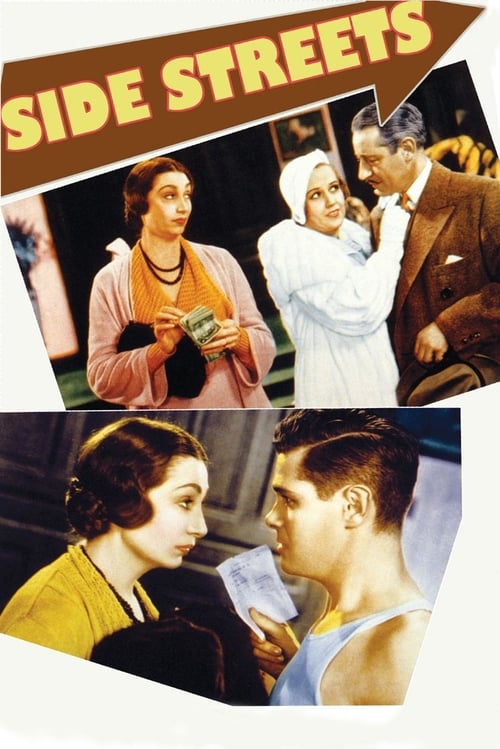
Side Streets is a conventional 1934 melodrama that reinforces the social and moral hierarchies of its era. The story relies on established archetypes, such as the 'spinster' and the 'ne'er-do-well,' to drive a narrative of character redemption. Because the film was produced under the strict constraints of the Hays Code, it prioritizes traditional social expectations and moral binaries. The focus remains on domestic and romantic stability rather than challenging systemic norms or power structures. Ultimately, the film functions as a period piece that upholds the status quo. It lacks significant representation of diverse identities, opting instead for the homogeneous storytelling standard of the early studio era.
Category Breakdown
The film operates within a strictly straight-centered framework. There is no evidence of diverse sexual or gender identities, nor any critique of traditional romantic structures.
The protagonist is defined by the stigmatized label of 'spinster.' While she has a profession, her role in the story seems tied to romantic outcomes rather than social independence.
The film reflects the era's standard of racial homogeneity. It lacks evidence of diverse casting, likely centering on an Anglo-Saxon cast typical of 1930s melodramas.
The narrative aligns with traditional Western values of moral reform. It uses redemption clichés to reinforce social stability rather than critiquing institutional structures.
There is no evidence of neurodivergent characters or physical disabilities. Any such depictions would likely have served as mere plot devices rather than meaningful portrayals.
Present on Screen
Limited or Absent
Official Synopsis
A spinster dressmaker falls for a ne'er-do-well.
1932
1927
1930
1931
1934
1928
1927

1920
No reviews yet. Be the first to share your thoughts on this movie!
Use the rating form above to leave a star rating and optional review.