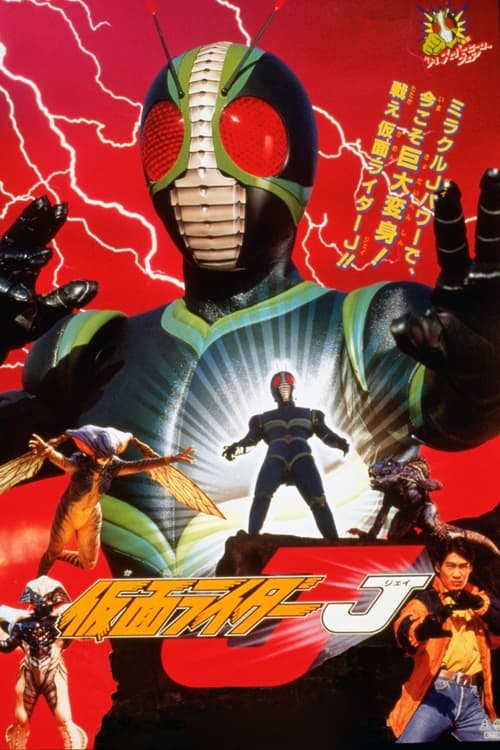
Kamen Rider J
1994
No user ratings available yet
Diversity score: 2.7 out of 10

1992
Director
Makoto Tsuji
Runtime
88 minutes
Average Rating
No ratings yetSynopsis
Doctors Kazamatsuri and Onizuka are geneticists researching cures on diseases such as AIDS and cancer by performing experiments to strengthen the human body. The test subject is Shin Kazamatsuri, motorcycle racer son of Doctor Kazamatsuri. Unknown to them, their operation is funded by a syndicate group, who plan to use this research to have the bodies of men strengthened for their own gain—they have already been experimenting in the field of cyborg soldiers, to a less-than-successful attempt. However, they did not count on Onizuka's own secret ambitions; the mad Onizuka wanted to create a new species, by fusing a grasshopper's DNA with the test subject's, in order to start a new civilization and be their god. He has tested on himself, but seems to be having greater success with Shin.
Overall Score
Fair
Category Breakdown
LGBTQ+ Representation
The film lacks explicit depictions of LGBTQ+ identities or non-heteronormative dynamics. The story focuses on biological experimentation and a male-centric struggle against a syndicate.
Gender Representation
The narrative prioritizes a male-dominated hierarchy involving male scientists and a male protagonist. There is a notable absence of female agency within the core conflict.
Racial & Ethnic Diversity
As a Japanese production, the film operates within a specific cultural context. The focus on a singular protagonist suggests a relatively homogeneous narrative environment.
Religious & Cultural Diversity
The film offers a sophisticated critique of institutional power and the 'god complex.' It frames scientific progress as a potential veil for systemic exploitation and corruption.
Disability Representation
The story explores the boundaries of the human body through genetic modification and cyborg experimentation. It touches on the concept of non-standard human biology.
Strengths
Areas for Improvement
AI Analysis
Shin Kamen Rider: Prologue is a genre-driven science fiction piece that prioritizes themes of biological ethics over intersectional representation. The narrative centers on a male-dominated struggle against scientific and corporate corruption. While the film lacks visible diversity in terms of gender, sexuality, and race, it finds depth in its critique of systemic authority. The antagonist's pursuit of god-like status through DNA manipulation provides a strong thematic backbone. Ultimately, the film functions as a study of bodily autonomy and the dangers of unchecked scientific hegemony rather than a diverse character study.
1994

2010

2017

1995

1980

2014

1993
2014

1991

2016

2017

2007
No reviews yet. Be the first to share your thoughts on this movie!
Use the rating form above to leave a star rating and optional review.