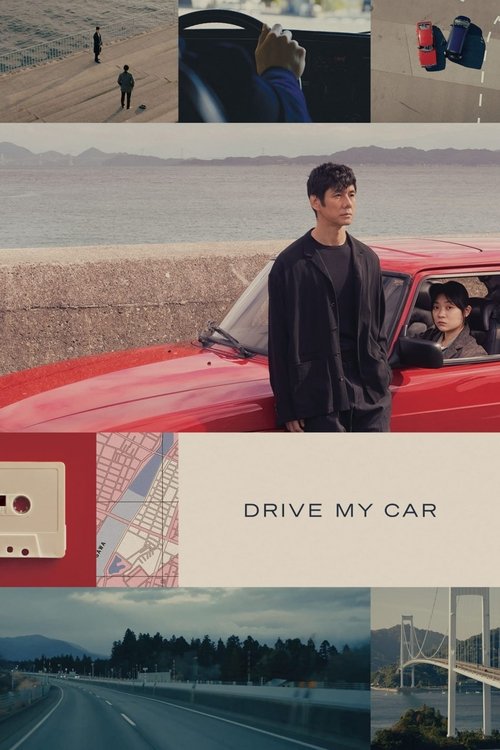
Drive My Car
2021
No user ratings available yet
Diversity score: 6.5 out of 10

2008
Director
Ryusuke Hamaguchi
Runtime
117 minutes
Average Rating
No ratings yetSynopsis
A young couple's announcement of their engagement to their friends is followed by a series of interactions and conflicts that forces everyone to reflect on their lives.
Overall Score
Fair
Category Breakdown
LGBTQ+ Representation
The film focuses on a young couple and their social circle. There is no explicit evidence of queer themes or non-heteronormative identities within the narrative.
Gender Representation
The story centers on an engagement, a milestone that can shift gendered power dynamics. It suggests a potential for complex portrayals of female agency beyond simple romantic tropes.
Racial & Ethnic Diversity
As a work by Japanese director Ryusuke Hamaguchi, the film operates within a non-Western framework. This provides a baseline of non-Anglo-Saxon representation.
Religious & Cultural Diversity
The narrative prioritizes subjective morality and individual psychological truth. It explores how social announcements force characters to reflect on their own lives and values.
Disability Representation
There is no evidence of characters with visible or invisible disabilities in the provided context.
Strengths
Areas for Improvement
AI Analysis
Passion is a character-driven drama that prioritizes psychological complexity over overt identity politics. It uses a social milestone—an engagement—to trigger interpersonal conflicts and reflections on life. While the film avoids traditional, simplistic hierarchies, it lacks specific evidence of queer agency or disability representation. Its strength lies in its non-Western cultural framework and its focus on deconstructing social facades. The film leans toward moral relativism, exploring how individual truths disrupt communal stability rather than adhering to a didactic moral framework.
2021

1997
1997

2011

2016

2011

2021

2021
2016
2015

2011

2020
No reviews yet. Be the first to share your thoughts on this movie!
Use the rating form above to leave a star rating and optional review.