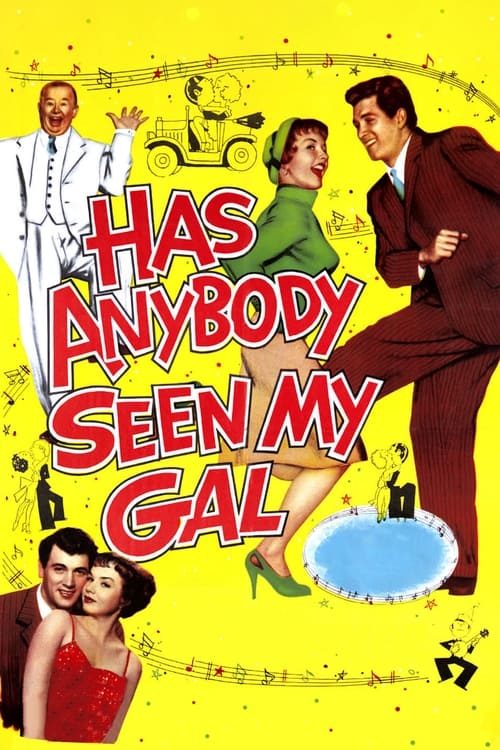
Has Anybody Seen My Gal?
1952
No user ratings available yet
Diversity score: 2.8 out of 10

1952
NRDirector
Douglas Sirk
Runtime
82 minutes
Average Rating
No ratings yetSynopsis
Alvah, a young GI who happens to own a vineyard, elopes to Las Vegas with Lee, his housekeeper's daughter. But Alvah's chicken pox postpone the wedding night. The rest revolves around more delays to the consummation, caused by Lee's manipulative Mama and the flock of mostly obnoxious relatives with whom she's filled the house.
Overall Score
Limited
Category Breakdown
LGBTQ+ Representation
The film focuses on a traditional heterosexual elopement. There is no evidence of non-cisnormative identities or critiques of heteronormativity within the narrative.
Gender Representation
Female characters drive much of the tension through complex domestic power dynamics. However, the plot still relies on gendered economic security and marriage suitability.
Racial & Ethnic Diversity
The film appears to feature a homogeneous cast centered around a vineyard. There is no indication of racial blending or non-white characters with high agency.
Religious & Cultural Diversity
The story deconstructs the idealized mid-century matriarch by portraying the mother as a manipulative, dishonest figure. It remains rooted in Western capitalist structures.
Disability Representation
Illness is used merely as a structural device to delay the romance. Physical ailments serve as plot contrivances rather than character-driven explorations of lived experience.
Strengths
Areas for Improvement
AI Analysis
Douglas Sirk’s direction suggests a narrative that critiques social structures and domestic constraints. The film finds its most interesting ground in subverting the 'perfect' family unit, presenting the domestic sphere as a site of manipulation rather than stability. However, the film remains a product of its 1950s temporal context. It lacks intersectional representation and adheres to the demographic norms of early American studio comedies, focusing on a homogeneous cast and traditional romantic obstacles.
1952
1939
1942
1935
1947

1961

1941
1949
1955
1917

1940
1948
No reviews yet. Be the first to share your thoughts on this movie!
Use the rating form above to leave a star rating and optional review.