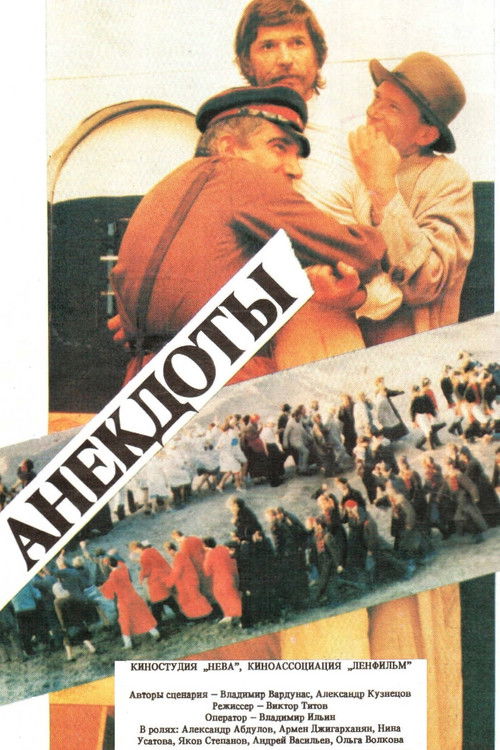
Jokes
1990
No user ratings available yet
Representation score: 7.7 out of 10
Representation Score
Minimal
1994
Director
Viktor Volkov
Average Rating
No ratings yetNew Showbiz Analysis
Viktor Volkov's comedy lacks any visible commitment to progressive representation. The film appears to rely on a homogeneous cast and traditional narrative structures that do not challenge social hierarchies. The production reflects the localized, conventional casting trends of mid-90s regional cinema. It fails to incorporate diverse racial backgrounds or queer identities into its comedic framework. Ultimately, the work functions as a standard period comedy without addressing disability, gender equity, or cultural relativism. It offers no disruption of traditional social norms.
Category Breakdown
The film does not include any characters with non-binary gender identities or same-sex relationships. There are no hints of queer-coded subtext in the story.
The cast is predominantly male. There is no indication of women having significant roles or challenging traditional gender roles.
The production seems to have a localized, homogeneous cast. There is no evidence of diverse ethnic representation or a non-white majority ensemble.
The film follows standard comedic conventions without critiquing religion or traditional institutions. It lacks any anti-Western or secularist narratives.
There is no information about characters with visible or invisible disabilities. The plot does not integrate neurodivergence or physical disabilities.
Present on Screen
Limited or Absent
1990
1973
2000
1991
2004

1992
1941
1937
No reviews yet. Be the first to share your thoughts on this movie!
Use the rating form above to leave a star rating and optional review.