The Phonograph
1969
No user ratings available yet
Representation score: 0.6 out of 10
Representation Score
Limited
1967
Director
Walerian Borowczyk
Runtime
10 minutes
Average Rating
No ratings yetNew Showbiz Analysis
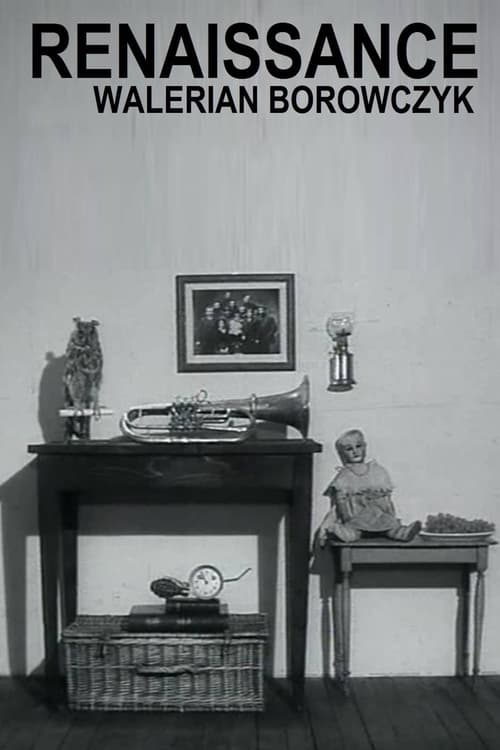
Renaissance is a surrealist animated short that prioritizes form and eroticism over character-driven narrative. Its strength lies in its ability to challenge traditional social and religious structures through dreamlike, non-linear vignettes. By focusing on pure aestheticism, it moves away from the rigid dogmas of the church or state. However, the film's narrow visual scope limits its impact. It remains firmly rooted in a classical European aesthetic that excludes racial and ethnic diversity. The emphasis on the female form as an object of art, while transgressive, lacks the ability to act necessary for progressive gender representation. Ultimately, the work functions as a study in visual rhythm rather than a vehicle for diverse social commentary.
Category Breakdown
The film does not explicitly depict LGBTQ+ identities or romantic relationships. It focuses on eroticism that challenges traditional courtship but does not provide clear examples of queer-coded storylines.
The film emphasizes the female form through a voyeuristic lens. While it avoids portraying women in traditionally submissive roles, it does not give female characters much control over their actions.
The film maintains a classic European aesthetic without diversity. The visual style is uniform, reflecting the historical setting without including non-Anglo-Saxon identities or actors from different backgrounds.
Surrealism enables the film to question traditional Western social structures like church or state. It prioritizes sensory experience and instinct over religious doctrine.
The film does not show any physical or neurodivergent disabilities. The visual focus remains on idealized or abstract human forms.
Present on Screen
Limited or Absent
Official Synopsis
To the sound of trumpets, a collection of pulverised antique bric-a-brac begins to reassemble itself, revealing a stuffed owl, a cornet, a hamper, books, a doll, a plate – and a bomb...
1969

1973
1965
1967

1958
1987
1967

1965
No reviews yet. Be the first to share your thoughts on this movie!
Use the rating form above to leave a star rating and optional review.