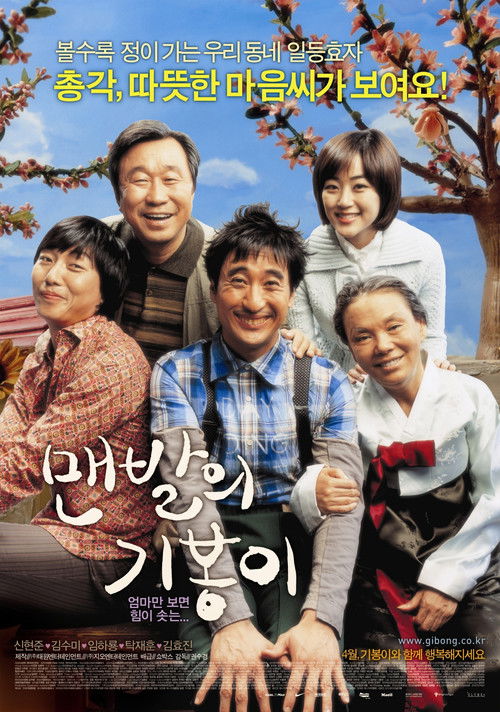
Barefoot Ki-Bong
2006
No user ratings available yet
Representation score: 4.4 out of 10

Representation Score
Fair
2019
Director
Lee Kae-byeok
Runtime
111 minutes
Average Rating
No ratings yetNew Showbiz Analysis
Cheer Up, Mr. Lee is a work of social realism centered on a neurodivergent protagonist. It avoids common clichés by making intellectual disability a core part of the character's journey rather than a mere plot device. The film excels at portraying the dignity of those on the margins, using the protagonist's story to critique systemic economic failures. It offers a nuanced look at how socioeconomic instability impacts family structures. While the film lacks representation of LGBTQ+ identities or racial diversity, its strong commitment to disability representation and its unflinching portrayal of the struggles of the working class provide significant narrative value.
Category Breakdown
The film does not include any LGBTQ+ characters or explore non-straight relationships. The narrative focuses solely on the paternal bond and socioeconomic issues.
Saet-byul shows significant independence, challenging typical passive portrayals of children. The film explores the complexities of single motherhood and female resilience in a precarious economy.
The cast is culturally uniform, fitting the film's specific social-realist setting. It avoids Western norms by keeping the story grounded in its Korean context.
The narrative critiques capitalist systems and the dissolution of traditional family units. It highlights the lived experiences of underrepresented people over institutional or Western ideals.
The film centers a protagonist with an intellectual disability, giving him a leading role. It avoids 'inspiration porn,' focusing instead on his authentic journey through a complex world.
Present on Screen
Limited or Absent
Official Synopsis
Chul-soo is a man with an intellectual disability. One day, Chul-soo finds out that a young girl, Saet-byul, who is in hospital is his daughter. And soon, Saet-byul sneaks out of the hospital and travels by herself to a faraway city for her friend's birthday. As Chul-soo accompanies Saet-byul's journey, friendship develops between the two.
2006

1996
2022
2023

2019

2019
2006
2019
No reviews yet. Be the first to share your thoughts on this movie!
Use the rating form above to leave a star rating and optional review.