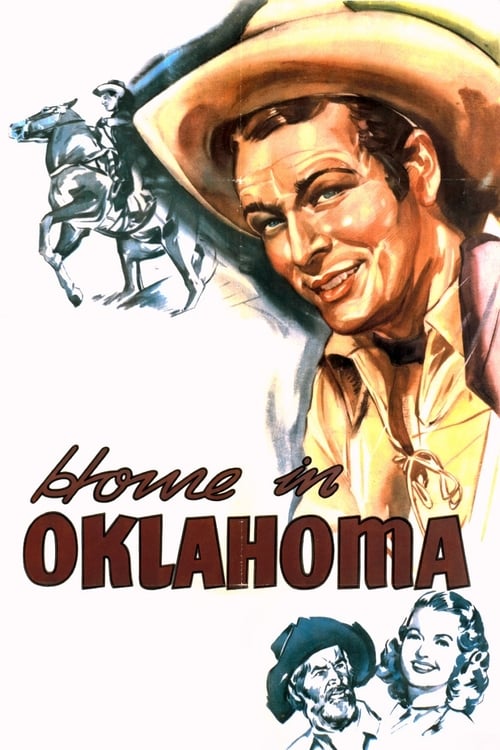
Home in Oklahoma
1946
No user ratings available yet
Representation score: 1.3 out of 10
Representation Score
Minimal
1952
NRDirector
William Witney
Runtime
67 minutes
Average Rating
No ratings yetNew Showbiz Analysis
The film opens with a runaway stagecoach in the Colorado high country, a standard Western setup that quickly pivots to a domestic dispute over ranch shares. The sold meaning is clear: the rugged, self-sufficient cowboy (Rex Allen) is the moral center, while the scheming, corporate-minded lumbermen (the Hurleys) represent a corrupt modernity that must be defeated. The camera loves Allen and his horse, Koko, framing their bond as superior to the human conflicts that drive the plot. The narrative treats the land as a judge that rewards respect and punishes exploitation, a traditional hierarchy where nature and merit align. The film’s argument is straightforward: physical competence and moral integrity are the only valid currencies. Allen is never wrong, never vulnerable, and never punished; his competence is absolute. The villain, Dusty Hurley, pays the price for his deception, dying in the process, while the true moral order is restored. The ending is a tableau of domestic restoration: the ranchers are stopped from fighting, the villain is jailed, and Allen rides away alone, leaving the romantic prize (Jackie) with the comic foil (Slim Pickens). This final image reinforces the idea that the hero’s virtue is self-sufficient, requiring no attachment to be complete. The representation is thin but consistent with its era. Louise Beavers, as the maid, is a functional part of the background, her labor invisible but essential to the white household’s stability. Slim Pickens’ cross-dressing is played for slapstick, highlighting the rigidity of gender roles without challenging them. The film does not innovate in its social framing; it simply reaffirms the traditional Western values of the time, where the competent man and the natural order are the ultimate authorities. The last word belongs to the landscape and the horse, not the human characters, a quiet endorsement of a world where nature and tradition are the final arbiters of justice.
Category Breakdown
No queer identity appears. Heteronormativity is the unmarked default. The film offers no same-sex intimacy or alternative family structures.
Women serve as prizes or obstacles. Jackie is the romantic reward, not the agent. The Hurley siblings embody traditional rural family dynamics.
Louise Beavers appears as Mattie, the Black maid. She functions as invisible domestic labor. Her character has no narrative agency or interiority.
The Hurley siblings embody traditional rural family dynamics. The film reaffirms traditional Western values. Nature and tradition are the final arbiters of justice.
No disabled characters appear. Physical competence is the sole metric of moral worth. The narrative relies entirely on able-bodied action.
Present on Screen
Limited or Absent
Official Synopsis
The Hurley's own a lumber mill and want to harvest all the timber in the valley. They kill the Forester and substitute their brother Dusty in his place. Dusty then says all the trees are infected and must be cut down. But Rex Allen is suspicious and writes to the Forestry Department and gets involved with the murders.
1946
1948

1951
1938

1947

1934
1945
1940
No reviews yet. Be the first to share your thoughts on this movie!
Use the rating form above to leave a star rating and optional review.