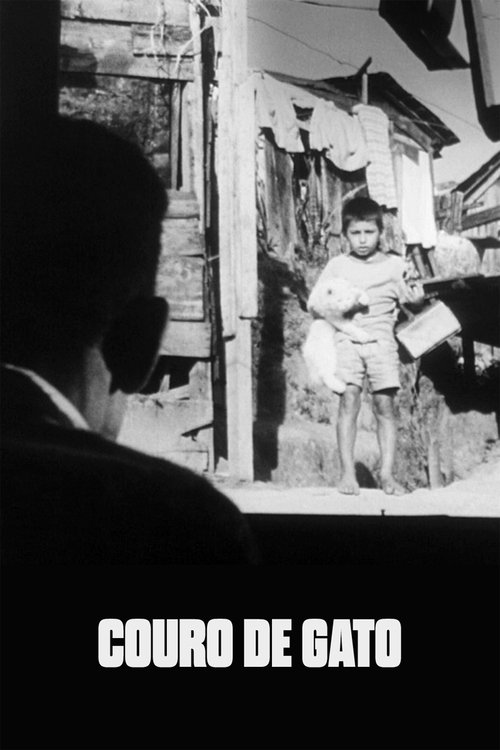
Cat Skin
1962
No user ratings available yet
Diversity score: 7.4 out of 10

1962
Director
Marcos Farias, Leon Hirszman, Joaquim Pedro de Andrade, Carlos Diegues, Miguel Borges
Runtime
92 minutes
Average Rating
No ratings yetSynopsis
Five segments about the hardships faced by people living in slums on hills in Rio de Janeiro.
Overall Score
Good
Category Breakdown
LGBTQ+ Representation
The film focuses primarily on socio-economic struggles rather than explicit queer identity politics. There is no documented evidence of non-cisnormative identities within the narrative.
Gender Representation
The narrative likely highlights the domestic and labor-related struggles of women. It challenges patriarchal stability by showing how economic desperation disrupts traditional family hierarchies.
Racial & Ethnic Diversity
This work centers the Afro-Brazilian and mixed-race experience. It disrupts the whitewashed gaze of mainstream media by prioritizing the agency of marginalized populations.
Religious & Cultural Diversity
The film critiques the failure of state institutions and Western-style urban development. It rejects idealized national myths in favor of a gritty, realistic portrayal of social friction.
Disability Representation
There is no evidence of specific character arcs centered on disability. While poverty intersects with health, no specific representations are confirmed.
Strengths
Areas for Improvement
AI Analysis
Five Times Favela is a landmark of social realism that uses the Rio de Janeiro slums to deconstruct class and racial power dynamics. By centering the inhabitants of the favela, the directors challenge the hegemony of the urban elite through a lens of systemic critique. The film excels in its racial and cultural authenticity, providing a necessary counter-narrative to the era's mainstream media. It treats the setting not just as a backdrop, but as a site of active struggle against institutional failure. However, the film's focus on socio-economic hardship leaves little room for explicit explorations of LGBTQ+ identities or specific disability representation. The narrative remains firmly rooted in the material realities of class and race.
1962

1966

1975

1972
2017

2008

1987

2009

2013

1974

2001
2012
No reviews yet. Be the first to share your thoughts on this movie!
Use the rating form above to leave a star rating and optional review.