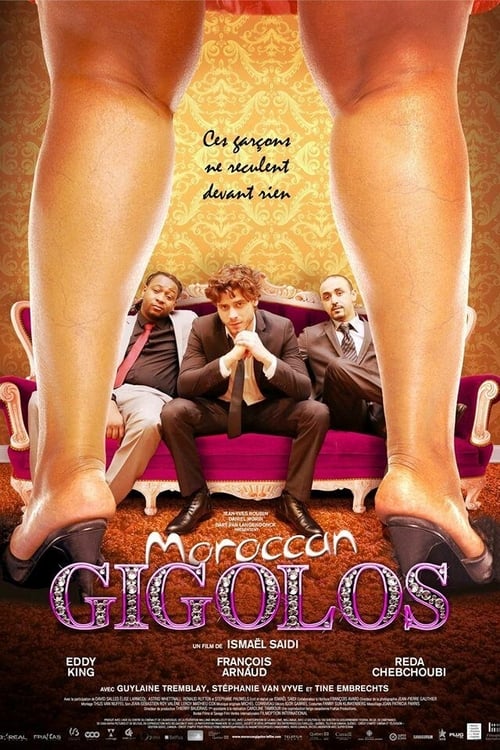
Moroccan Gigolos
2013
No user ratings available yet
Representation score: 5.3 out of 10

Representation Score
Fair
2009
Director
Gustavo Loza
Runtime
110 minutes
Average Rating
No ratings yetNew Showbiz Analysis
Stop and Go provides a unique look at Mexican youth culture, avoiding idealized family structures to explore the less glamorous side of student life. The film successfully offers a non-Western perspective by focusing on characters navigating socioeconomic constraints and the informal economy. However, the narrative remains tied to traditional gender dynamics, as the plot is driven by male protagonists seeking female companionship. The absence of LGBTQ+ representation further narrows the film's scope of social diversity. Ultimately, the film's strength lies in its rejection of institutional morality, favoring an entrepreneurial spirit that challenges conventional social hierarchies.
Category Breakdown
The film centers on heterosexual relationships and does not include any LGBTQ+ characters or narratives that question the assumption that everyone is straight.
The movie challenges traditional domestic roles by focusing on characters outside of supervised home settings. However, the story mainly revolves around male protagonists pursuing female companionship, which upholds traditional gender power dynamics.
As a Mexican production, the film highlights a non-Anglo-Saxon perspective. It avoids stereotypes by focusing on characters navigating the informal economy and unconventional urban living situations.
The film challenges traditional institutions by presenting the home as a restrictive space and focusing on a mobile existence rather than fixed family structures.
There is no evidence regarding the inclusion or portrayal of characters with physical or neurodivergent disabilities.
Present on Screen
Limited or Absent
Official Synopsis
Perico and Emilio, almost good looking teenagers, enterprising bums and lovers of the seamy side of student life, have the same problem: they have no place to take their girlfriends to give free rein to their baser passions: they can't go to their homes or those of the girls, and only sluts go to hourly hotels. Faced with this need (and a great deal of pent up testosterone), they decide to become entrepreneurs, thanks to Perico's father's old VW van, that, as well as a possible solution for their lust, can also be turned into the business of a lifetime, as Professor Carranco would say: Today, whoever finds a niche in the market can become a millionaire.
2013

2001

2022

2006
2012

2009

2011

2011
No reviews yet. Be the first to share your thoughts on this movie!
Use the rating form above to leave a star rating and optional review.