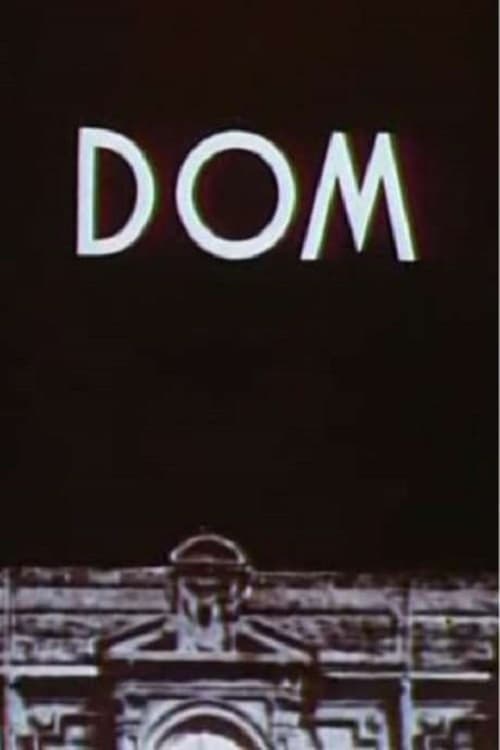
House
1958
No user ratings available yet
Representation score: 0.6 out of 10

Representation Score
Fair
1957
Director
Walerian Borowczyk, Jan Lenica
Runtime
9 minutes
Average Rating
No ratings yetNew Showbiz Analysis
This animated short serves as a piece of formalist experimentation from the Polish School of Animation. It prioritizes philosophical inquiry and existentialism over the reinforcement of established social structures or traditional character archetypes. Because the film operates within a realm of high abstraction and surrealism, it avoids conventional social hierarchies. By removing romantic arcs and recognizable human traits, it disrupts mid-century narrative norms, although this is a result of the medium's style rather than explicit social commentary. Ultimately, the work's diversity is defined by its refusal to engage with traditional identity markers, opting instead for a vacuum where identity is tied to form and movement.
Category Breakdown
The film's abstract nature prevents any direct depiction of sexual orientation. The central pair suggests a duality but lacks romantic elements, preventing a higher score.
Characters are devoid of recognizable human traits and social roles, which deconstructs gendered power dynamics through omission rather than active subversion of specific archetypes.
Racial and ethnic markers are absent due to the animated, abstract style. Identity is tied to form and movement rather than ethnicity, avoiding stereotyping but lacking intentional inclusion.
The narrative critiques traditional social orders by prioritizing individual existentialism over religious or patriotic frameworks. It aligns with a secular, postmodern worldview through its focus on subjective morality.
The characters are non-human, abstract entities. There is no evidence of characters portrayed with physical or neurodivergent disabilities.
Present on Screen
Limited or Absent
Official Synopsis
An oddball pair try to find their identity and place in an abstract world.
1958
1988
1957
1985
1967
1973

1963
1999
No reviews yet. Be the first to share your thoughts on this movie!
Use the rating form above to leave a star rating and optional review.