
Back to Stay
2011
No user ratings available yet
Diversity score: 5.5 out of 10
2009
Director
Celina Murga
Runtime
110 minutes
Average Rating
No ratings yetSynopsis
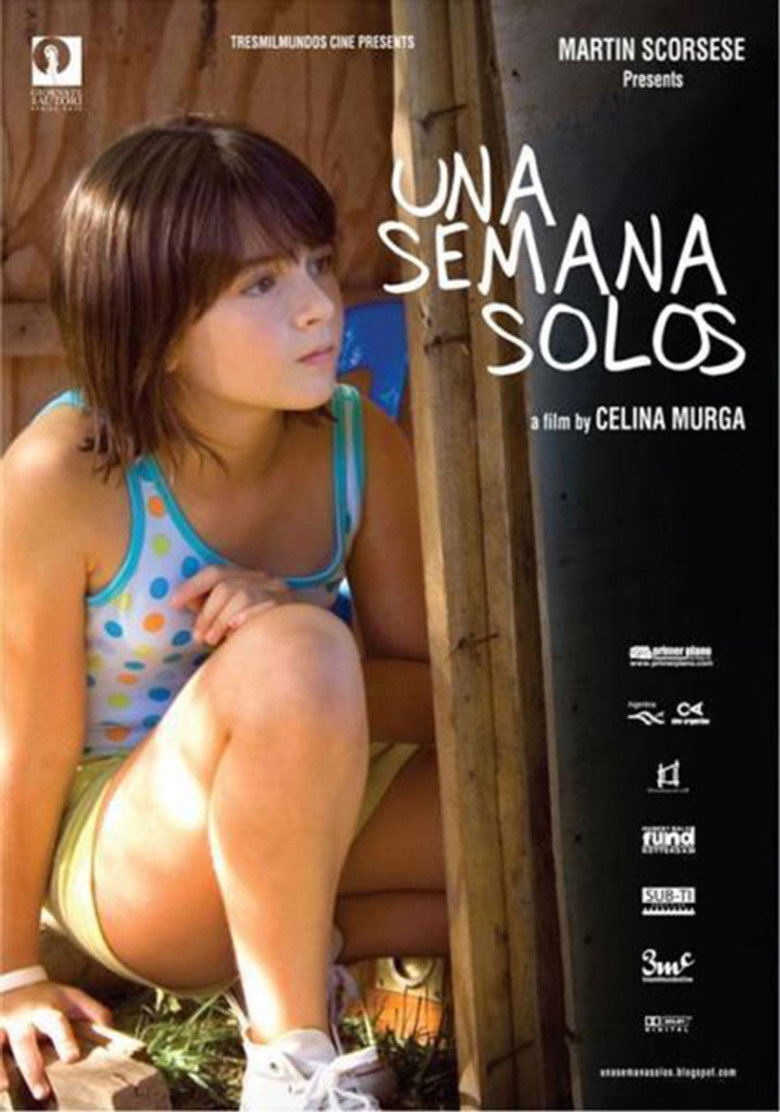
Maria is a girl in her early teens whose family lives in an upscale gated suburb. Maria's parents are going out of town for a week, and rather than leave her with relatives or hire a babysitter, Maria is put in charge of looking after her little sister Sofia, with housekeeper Esther serving as a nominal adult authority figure, though for the most part she lets Maria and the others do what they please. With only their parents bedroom off-limits, Maria and Sofia have the run of the house, and soon they and their friends Facundo, Quique, Rodrigo and Timmy are spending their days exploring the place. As the kids begin creating their own rules to run counter to the ones their absent parents set down, Esther brings a young relative, Fernando, to play with them, and the privileged kids begin to get a notion of the ways of the outside world.
Overall Score
Fair
Category Breakdown
LGBTQ+ Representation
The film explores adolescent social complexities and self-discovery within a domestic setting. However, it lacks explicit depictions of non-cisnormative identities or narratives designed to critique heteronormativity.
Gender Representation
Maria serves as a central figure of autonomy, managing the household in her parents' absence. This placement disrupts traditional hierarchies and provides a meaningful study of female independence.
Racial & Ethnic Diversity
The cast is largely homogeneous, reflecting a specific provincial Argentine context. Subtle class-based intersectionality emerges through the interaction between the privileged children and the housekeeper's relative, Fernando.
Religious & Cultural Diversity
The narrative deconstructs traditional authority by showing children renegotiating parental rules. It prioritizes the subjective experiences of youth over the enforcement of established Western institutional structures.
Disability Representation
The film focuses on the psychological and social transitions of adolescence. There are no prominent or central depictions of physical or neurodivergent disabilities.
Strengths
Areas for Improvement
AI Analysis
A Week Alone is a minimalist character study that prioritizes the internal lives of adolescents over overt identity politics. Its primary strength lies in its subversion of domestic hierarchies, specifically through the lens of female agency and the subtle introduction of socioeconomic friction. The film succeeds in presenting a nuanced view of childhood autonomy. By centering on Maria's management of the household, the narrative moves away from traditional tropes of parental oversight and explores how children navigate their own social rules. However, the film lacks explicit representation in several key areas. It does not feature overt LGBTQ+ narratives or central depictions of disability, remaining focused on a more localized, homogeneous social environment.
2011

2014

2020
2022
2012

2015
2014
2012
2015

2009
2012
2019
No reviews yet. Be the first to share your thoughts on this movie!
Use the rating form above to leave a star rating and optional review.