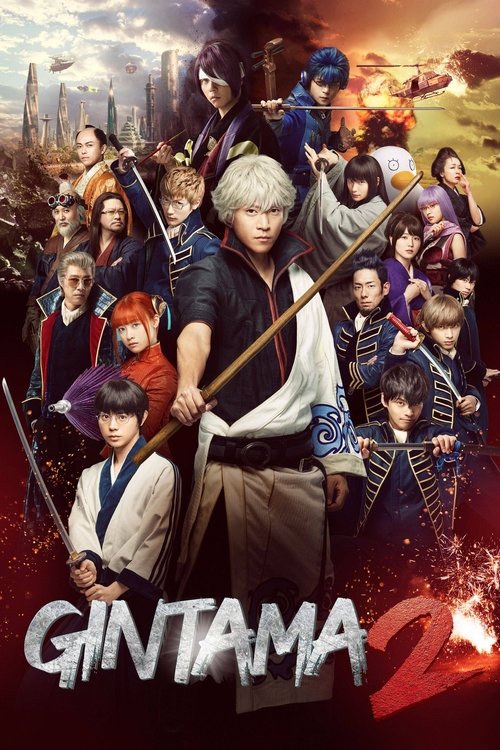
Gintama 2: Rules Are Made to Be Broken
2018
No user ratings available yet
Representation score: 8.4 out of 10

Representation Score
Excellent
2017
PG-13Director
Yuichi Fukuda
Runtime
130 minutes
Average Rating
No ratings yetNew Showbiz Analysis
Gintama succeeds as a sophisticated deconstruction of historical and social norms. It effectively challenges traditional masculine hierarchies and institutional structures by highlighting the ability to act of underrepresented outsiders. The film's strength lies in its post-colonial subtext and its refusal to uphold an idealized, homogeneous past. However, the film's approach to identity is uneven. While it excels at subverting gender roles and exploring the complexities of an occupied territory, it lacks depth regarding specific LGBTQ+ identities. The exploration of physical differences through biological exceptionalism also misses an opportunity for more grounded representation. Ultimately, the film provides a nuanced look at identity within a fractured society, using its sci-fi setting to critique systemic occupation and rigid social codes.
Category Breakdown
The film lacks a dedicated storyline focused on LGBTQ+ identities. Queer representation is incidental rather than intentional, and there are no specific narratives centered around non-assuming gender matches what was assigned at birth identities.
Female characters such as Kagura and Tsukuyo play prominent roles in the action. They demonstrate combat skills that often match or surpass those of male characters, challenging traditional gender hierarchies.
The Amanto aliens represent various cultural perspectives through their diverse non-human forms. These aliens serve as a metaphor for extraterrestrial invaders in a colonized nation.
The story deconstructs the rigid Bushido code and traditional samurai hierarchies. It emphasizes individual survival and moral relativism over state-mandated morality and institutional righteousness.
The film explores physical differences through the unique biological capabilities of the Yato clan. However, this often leans towards biological exceptionalism rather than a nuanced portrayal of lived experiences.
Present on Screen
Limited or Absent
Official Synopsis
In an era where aliens have invaded and taken over feudal Tokyo, a young samurai finds work however he can.
2018

2010
2016

2021

1984
2011

2019
No reviews yet. Be the first to share your thoughts on this movie!
Use the rating form above to leave a star rating and optional review.