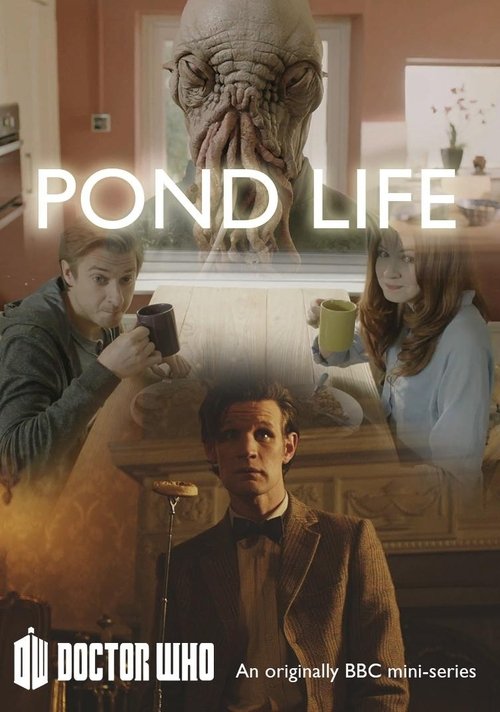
Doctor Who: Pond Life
2012
No user ratings available yet
Representation score: 2.5 out of 10

Representation Score
Limited
2013
TV-PGRuntime
4 minutes
Average Rating
No ratings yetNew Showbiz Analysis
The TARDIS console room is a cramped, domestic stage where the Eleventh Doctor and Clara Oswald circle each other’s secrets. The film sells a vision of egalitarian partnership, positioning Clara as the moral center who grounds the Doctor’s chaotic brilliance. Yet the camera consistently favors the Doctor’s perspective, framing his emotional stumbles as charming eccentricities rather than genuine failures. The sold meaning is that love requires communication, but the internal logic rewards the Doctor’s eventual reconciliation without demanding he fundamentally change. The last image, with the pair standing together against the stars, cements their bond as a perfect, self-contained unit. This 2013 installment of *Doctor Who* leans into the "power couple" trope, where the female lead’s value lies in her ability to humanize the male lead. While Clara retains her agency and voice, the narrative ultimately reinforces the Doctor’s primacy, treating his alienness as a source of wonder rather than a lens for deeper social critique. The film is a polished, intimate drama that celebrates modern relationship dynamics but stops short of challenging the underlying hierarchy of competence and authority.
Category Breakdown
The narrative centers exclusively on a heterosexual dynamic between the Doctor and Clara. No same-sex intimacy, queer characters, or non-binary identities appear on screen.
Clara functions as the moral and emotional anchor, often correcting the Doctor’s self-absorption. The Doctor’s emotional ineptitude serves as a running gag, yet he retains the primary competence in time travel and survival.
Both leads are white British actors. The TARDIS setting is isolated from broader societal demographics, leaving racial dynamics entirely unaddressed.
The TARDIS operates as a chosen family unit, replacing traditional domestic structures. Their partnership is framed as a modern, egalitarian bond, though the Doctor’s alien status remains a source of wonder rather than critique.
No characters display physical or cognitive impairments. The Doctor’s alien nature is treated as a superpower, not a disability, and no body diversity is depicted.
Present on Screen
Limited or Absent
Official Synopsis
The Eleventh Doctor and Clara Oswald muse over each others' mysteries and reflect on how little they really know about one another.
2012
2014
2013

1996

2014

2013

2007

2008
No reviews yet. Be the first to share your thoughts on this movie!
Use the rating form above to leave a star rating and optional review.