Find another title
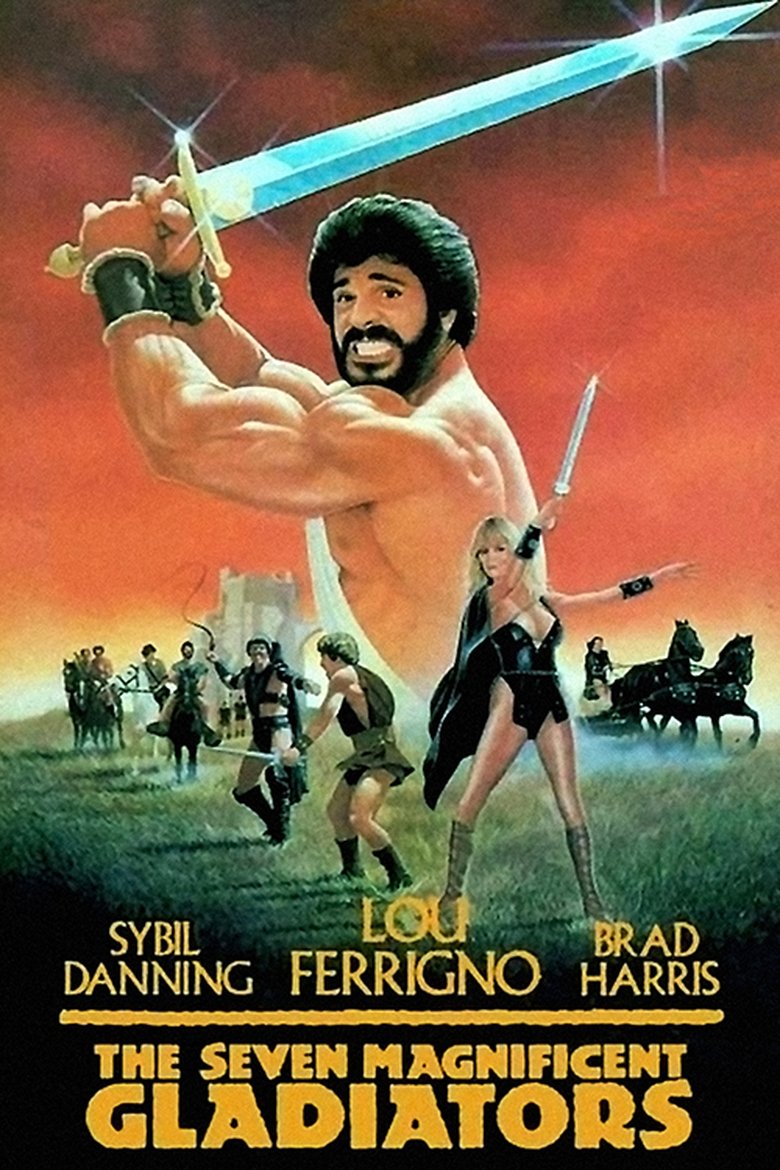
The Seven Magnificent Gladiators
1983
Director
Claudio Fragasso, Bruno Mattei
Runtime
100 minutes
Average Rating
No ratings yetSynopsis
A bandit leader endowed with supernatural powers by his sorceress mother makes yearly raids on a peasant village. However, the women of the village come into possession of a magic sword, and go in search of a hero who is able to wield it and save their village from the evil bandit.
Where to Watch
Diversity & Representation
Overall Score
Limited
Category Breakdown
LGBTQ+ Representation
The film adheres to standard 1980s exploitation tropes. It lacks any depiction of non-cisnormative identities or same-sex intimacy, operating entirely within a heteronormative framework.
Gender Representation
While women initiate the plot by seeking a hero, the film centers on hyper-masculine combatants. It reinforces traditional hierarchies by prioritizing male physical prowess over female agency.
Racial & Ethnic Diversity
The production reflects the homogeneous casting standards of European exploitation cinema. It operates within a Eurocentric historical fantasy framework without significant ethnic diversity.
Religious & Cultural Diversity
The story utilizes common outlaw and mercenary tropes for genre escapism. It relies on traditional hero and villain dichotomies rather than offering systemic or institutional critiques.
Disability Representation
The narrative focuses exclusively on physical combat readiness. There is no evidence of characters with visible or invisible disabilities being integrated into the story with agency.
Strengths
- The plot features a female-driven catalyst where village women seek a hero to save their community.
Areas for Improvement
- The film relies heavily on hyper-masculine archetypes and traditional gender hierarchies.
- There is a lack of racial and ethnic diversity in the casting and narrative.
- The story lacks representation for neurodivergence, chronic illness, or physical disabilities.
- The narrative fails to include any LGBTQ+ identities or non-cisnormative perspectives.
AI Analysis
The film is a product of the Italian exploitation era, prioritizing genre spectacle over social commentary. Its narrative structure relies on established archetypes of hyper-masculinity and traditional adventure tropes. Representation is limited by the era's constraints, resulting in a Eurocentric and heteronormative worldview. The focus remains on physical combat and standard hero/villain dynamics rather than nuanced or intersectional storytelling. Ultimately, the work functions as a standard genre piece that avoids deconstructing social or cultural norms, favoring traditional power structures and physical prowess.
Rate this Movie
Reviews
No reviews yet. Be the first to share your thoughts on this movie!
Use the rating form above to leave a star rating and optional review.