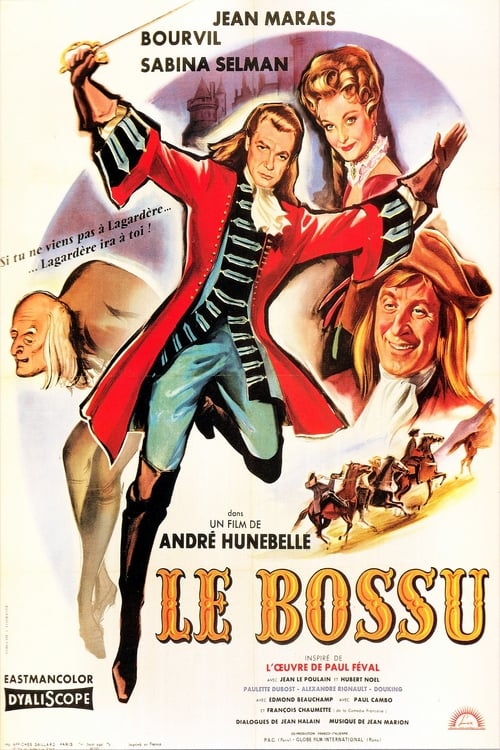
The Hunchback of Paris
1959
No user ratings available yet
Diversity score: 2.4 out of 10

1962
Director
André Hunebelle
Runtime
110 minutes
Average Rating
No ratings yetSynopsis
The Marquis Rodolphe de Sombrueil accidentally runs over a working man with his carriage and helps his widow -- unjustly accused of robbery -- to find her missing daughter.
Overall Score
Minimal
Category Breakdown
LGBTQ+ Representation
The film adheres to the heteronormative standards of 1960s French adventure cinema. There is no evidence of non-cisnormative gender identities or same-sex intimacy.
Gender Representation
The narrative follows conventional mid-century gender roles. While the widow drives the central mystery, her agency is largely reactive to her status as a victim of injustice.
Racial & Ethnic Diversity
The cast is overwhelmingly homogeneous, reflecting the historical social constraints of 19th-century Paris. There is no intentional inclusion of non-white characters to challenge demographic norms.
Religious & Cultural Diversity
The film explores the socioeconomic divide between the aristocracy and the Parisian underworld. It focuses on individual justice rather than an explicit critique of class structures.
Disability Representation
There is no discernible representation of visible or invisible disabilities. Characters are portrayed through standard adventure archetypes without focus on neurodivergence or physical impairment.
Strengths
Areas for Improvement
AI Analysis
The Mysteries of Paris operates as a traditional period adventure, prioritizing genre tropes like mystery and melodrama over social subversion. It functions within the established cinematic frameworks of 1962, focusing on restoring order rather than challenging systemic hierarchies. While the film addresses class disparity through its depiction of the Parisian underworld and aristocracy, it does so through a conventional moral lens. The narrative lacks intentional diversity in terms of race, gender agency, or LGBTQ+ identities, reflecting the era's production norms. Ultimately, the film serves as a piece of escapist entertainment that reinforces traditional social and gender hierarchies rather than deconstructing them.
1959
1954
1961
1968
No reviews yet. Be the first to share your thoughts on this movie!
Use the rating form above to leave a star rating and optional review.