Find another title
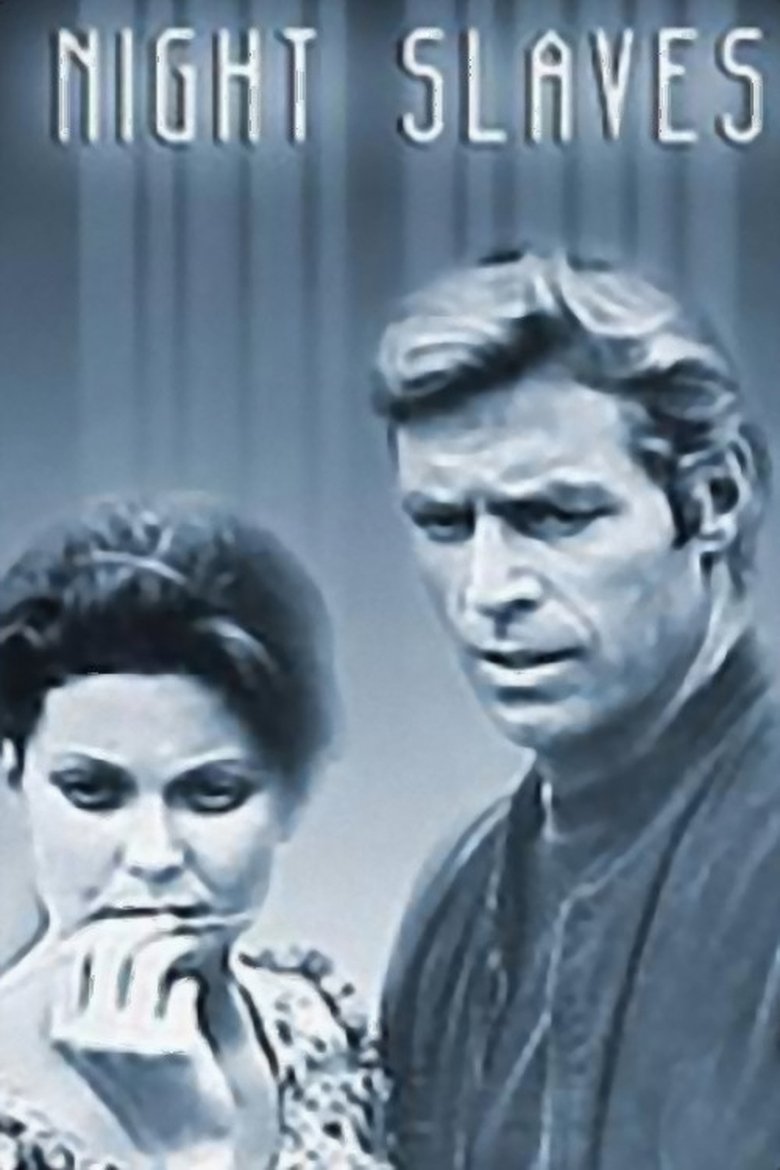
Night Slaves
1970
NRDirector
Ted Post
Runtime
72 minutes
Average Rating
No ratings yetSynopsis
A man and his wife stumble upon a town whose inhabitants turn into zombies and head for the edge of town every night... he seems to be the only one unaffected. What is happening to the townsfolk? Who is the mysterious young women he keeps seeing? Why isn't he affected?
Where to Watch
Diversity & Representation
Overall Score
Limited
Category Breakdown
LGBTQ+ Representation
The story centers on a strained heterosexual marriage between Clay and Marjorie. No queer identities or non-cisnormative subtext are present in the narrative.
Gender Representation
Marjorie is a central character, yet her agency is undermined by the hypnotic plot. She often serves as a passive participant, fitting the distressed female archetype.
Racial & Ethnic Diversity
The film features a homogeneous cast typical of 1970s television. The sleepy town setting suggests a culturally monolithic environment without multi-ethnic representation.
Religious & Cultural Diversity
The plot explores systemic loss of agency through hypnotic control. This critique of mass manipulation and forced labor provides a sophisticated subtext regarding social institutions.
Disability Representation
Clay’s metal head plate acts as a mechanical catalyst for his immunity. This medical distinction serves as a plot device rather than a deep exploration of lived experience.
Strengths
- The narrative uses science fiction to critique systemic loss of individual agency.
- Themes of mass manipulation provide a sophisticated subtext regarding social institutions.
Areas for Improvement
- The film relies on traditional, passive gender roles for its female lead.
- The cast lacks racial and ethnic diversity, reflecting a monolithic 1970s television style.
- Physical disability is used primarily as a convenient plot device for the protagonist.
AI Analysis
Night Slaves is a product of its era, relying on conventional casting and traditional gender roles. The narrative focuses heavily on a central heterosexual marriage and a homogeneous community. However, the film's science fiction framework offers a sophisticated critique of systemic oppression. By depicting a population stripped of autonomy through hypnotic control, it explores the fragility of the social contract and institutional power. While it lacks modern intersectional representation, the themes of mass manipulation elevate the film beyond standard genre fare.
Rate this Movie
Reviews
No reviews yet. Be the first to share your thoughts on this movie!
Use the rating form above to leave a star rating and optional review.