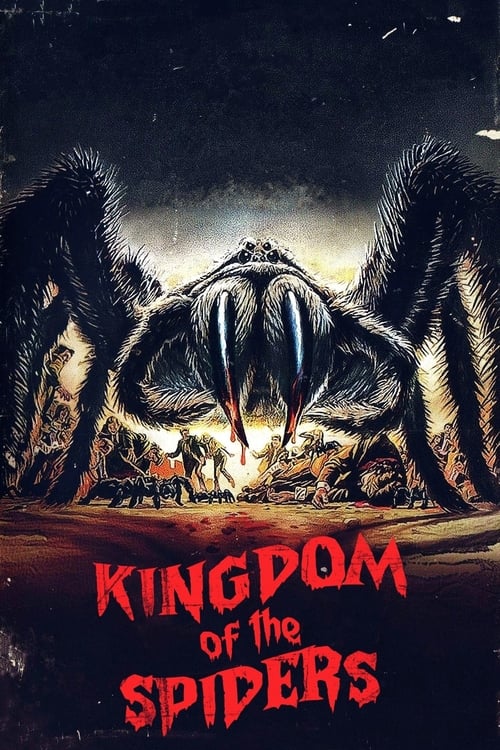
Kingdom of the Spiders
1977
No user ratings available yet
Representation score: 1.5 out of 10
Representation Score
Limited
1955
ApprovedDirector
Jack Arnold
Runtime
80 minutes
Average Rating
No ratings yetNew Showbiz Analysis
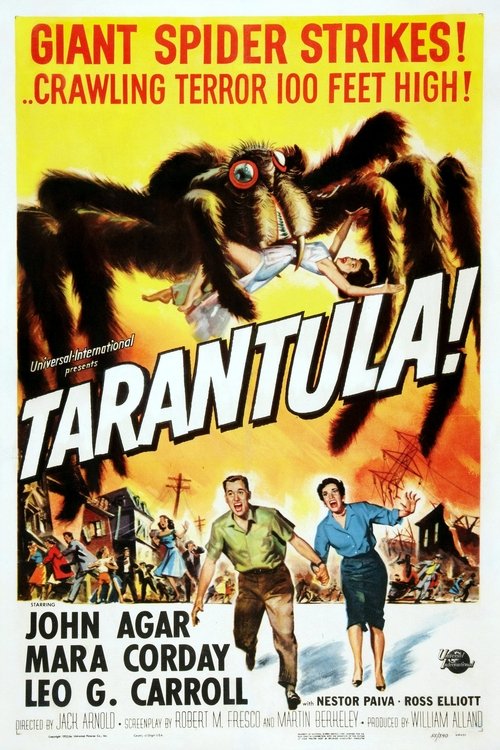
Tarantula is a classic mid-century creature feature that emphasizes scientific rationalism and institutional authority. The narrative structure relies on traditional hierarchies to restore order during a crisis. While the film sets itself in a Mexican backdrop, it lacks meaningful roles for Mexican characters, focusing instead on the perspectives and actions of scientific and military figures. Ultimately, the film upholds the norms of its time, reinforcing established gender roles and using medical conditions merely as plot devices.
Category Breakdown
There are no visible LGBTQ+ characters or explorations of non-straight relationships in the film. The story focuses solely on traditional interpersonal relationships.
The film follows mid-century gender roles where a female assistant helps in the investigation, but key decisions and leadership remain with male scientists and military officials.
Set in a Mexican location, the film includes Mexican villagers. However, these characters are mostly witnesses or victims and are not central to the main plot.
The film emphasizes traditional Western values, with the resolution driven by science and military authority, celebrating reason over chaos.
Acromegaly is mentioned as a plot device, advancing the mystery but not explored in depth as a character study.
Present on Screen
Limited or Absent
Official Synopsis
A rogue scientist near a small desert town arouses the suspicion of the town's doctor when his lab assistant is found dead from a case of acromegaly, which took only four days to develop. As the doctor investigates, aided by the scientist's new female assistant, they discover that something is devouring local cattle and humans in increasingly large quantities.
1977

1953

1958
1974
1954

1957
1933

1955
No reviews yet. Be the first to share your thoughts on this movie!
Use the rating form above to leave a star rating and optional review.