
Sex, Death and Bowling
2015
No user ratings available yet
Representation score: 6.0 out of 10
Representation Score
Fair
2010
Director
Yoji Yamada
Runtime
126 minutes
Average Rating
No ratings yetNew Showbiz Analysis
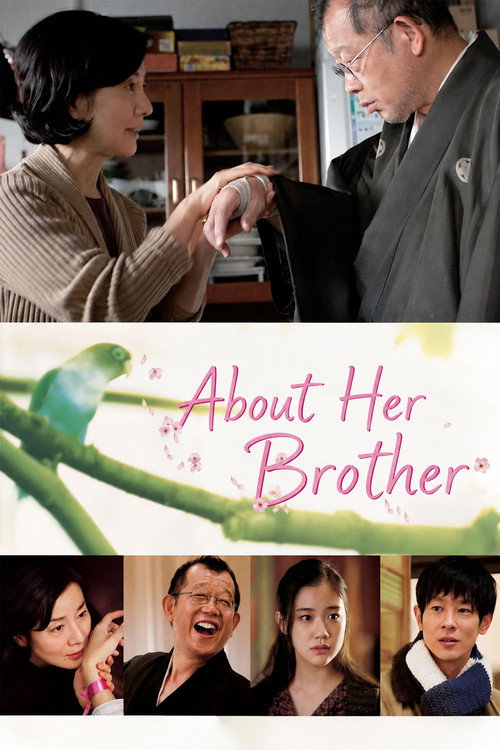
About Her Brother is a character-driven drama that highlights the tension between a structured protagonist and a underrepresented, eccentric brother. By focusing on the conflict between these characters, the film critiques the pressure to conform to societal norms. Terminal illness serves as the catalyst for emotional reconciliation, shifting from social exclusion to empathy. Although it doesn't explicitly address diverse racial or LGBTQ+ identities, the film provides a nuanced exploration of individual dysfunction within a traditional family structure.
Category Breakdown
The film centers on sibling relationships and family reconciliation. It does not include any non-straight or non-cisgender identities or stories involving LGBTQ+ characters.
A strong female lead provides a critical view of a socially inadequate male character. This challenges traditional male-centric stories by highlighting a woman's assessment of a man's shortcomings.
The film features a cast that reflects Japanese culture exclusively. It examines Japanese family dynamics without addressing broader racial diversity.
The story questions strict social rules and conformity. It looks at the change from rigid traditional judgments to more flexible, empathetic thinking.
A terminal illness drives the main characters' personal growth. The narrative also delves into the social conflicts arising from the brother's unconventional behavior.
Present on Screen
Limited or Absent
Official Synopsis
Ginko's younger brother Tetsuro, a failed comedian, is the oddball of the family. Embarrassing, loud and plain inappropriate at times causes Ginko to disown him. The two reunite when she discovers Tetsuro is terminally ill. Tetsuro’s impending death marks the beginning of love and toleration.
2015

2006

2010
2021

2006
2014

2010
2003
No reviews yet. Be the first to share your thoughts on this movie!
Use the rating form above to leave a star rating and optional review.