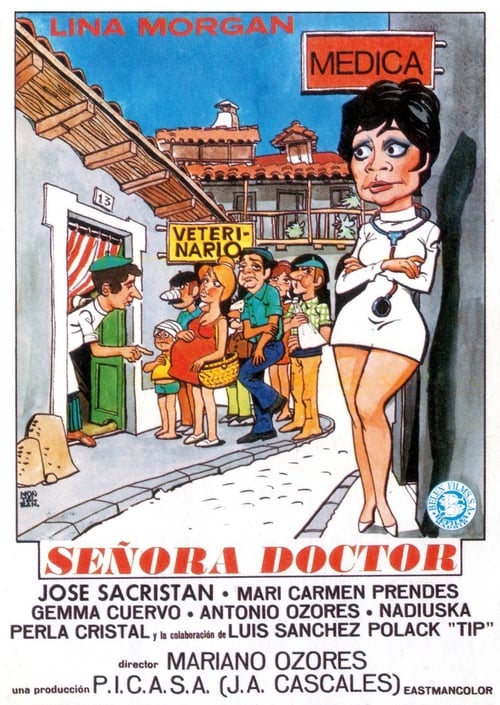
Señora Doctor
1974
No user ratings available yet
Representation score: 4.4 out of 10

Representation Score
Limited
1967
Director
Armando Bó
Runtime
90 minutes
Average Rating
No ratings yetNew Showbiz Analysis
Armando Bó’s work disrupts traditional domestic hierarchies by focusing on female protagonists with significant social and political influence. This film challenges the era's depiction of submissive women. However, the film remains limited by its narrow, homogeneous social framework, lacking LGBTQ+ representation and racial diversity. It reflects the commercial and social constraints of the time. Ultimately, the film stands as a transitional piece, achieving progress in gender dynamics while falling short in representing diverse identities and inclusive casting.
Category Breakdown
The film follows the assumption that everyone is straight or cisgender, typical of 1960s Argentina. There is no indication of LGBTQ+ identities or non-traditional gender expressions.
Flor Tetis challenges traditional power structures by influencing the village's male population. Her significant role in driving the story reverses conventional gender dynamics.
The film portrays a localized, homogeneous community typical of mid-century Argentine comedies. There is no evidence of diverse casting or intentional racial blending.
The story criticizes political integrity by showing how personal desires undermine municipal authority. It highlights the pursuit of office as a means for social advancement.
There is no evidence of characters with physical or neurodivergent disabilities playing central roles or having specific ability to act.
Present on Screen
Limited or Absent
Official Synopsis
Flor Tetis (Isabel Sarli) has the entire male population of the small village of "Ombú Quemado" under her thumb. The local doctor, Amable Gambetta (Pepe Arias), offers to marry her, since it will improve his chances of being elected mayor. Soon the combination of her sexual demands and political problems make him want to resign...
1974
1953
1967
2015
1977
1975
1976

1969
No reviews yet. Be the first to share your thoughts on this movie!
Use the rating form above to leave a star rating and optional review.