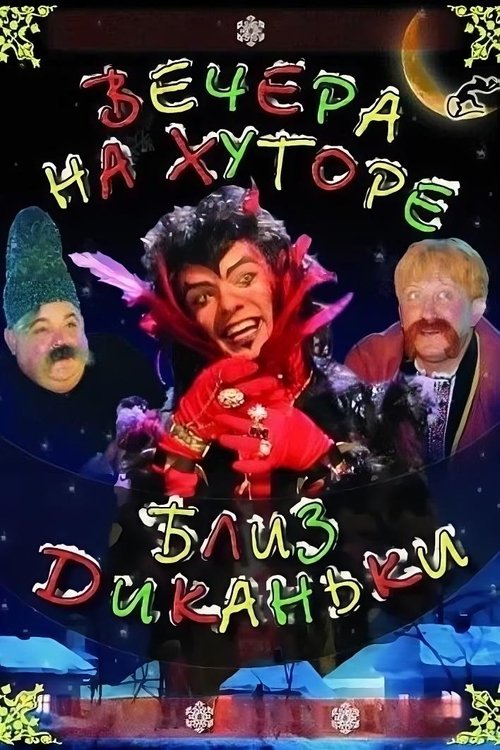
Evenings on a Farm Near Dykanka
2001
No user ratings available yet
Representation score: 3.7 out of 10
Representation Score
Limited
1961
Director
Aleksandr Rou
Runtime
66 minutes
Average Rating
No ratings yetNew Showbiz Analysis
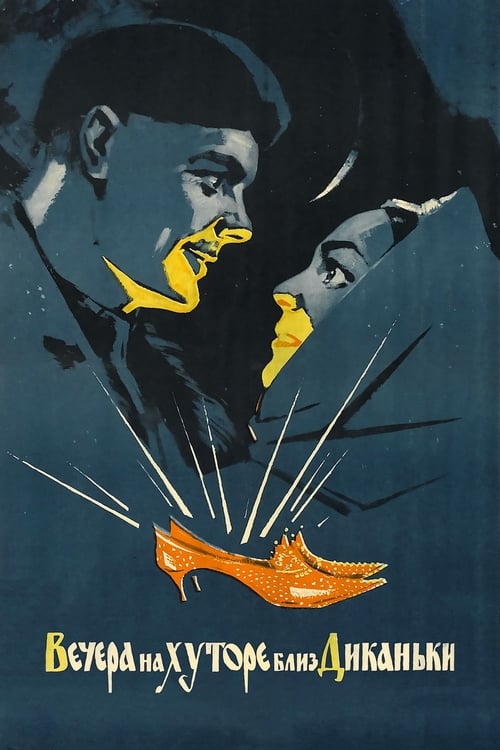
Evenings on a Farm near Dikanka is a culturally specific fantasy that draws heavily from Ukrainian folklore. It successfully centers a regional identity and uses magical realism to explore class-based social hierarchies. However, the film remains tied to the traditional frameworks of its 1961 era. The romantic core adheres to conventional romantic clichés and traditional gender roles, and the cast lacks diverse identity representation beyond its specific ethnic context. Ultimately, the work functions as a celebration of folk tradition that prioritizes cultural heritage over contemporary social dynamics.
Category Breakdown
The film does not depict any non-straight relationships or identities. The story focuses solely on a traditional heterosexual romance between Vakula and Oksana.
Oksana has influence and plays a significant role within her domestic life. However, the narrative relies on conventional romantic clichés and traditional gender roles.
The film highlights specific Ukrainian folklore and Cossack culture. Although ethnically uniform, it centers a localized regional identity rather than a Western-centric perspective.
The narrative deconstructs religious hierarchies by portraying the Devil as a manipulable character. It examines class tensions through the lens of folk traditions.
There is no evidence of physical or neurodivergent disabilities being portrayed in the narrative.
Present on Screen
Limited or Absent
Official Synopsis
The story that happened on the farm near Dikanka on the night before Christmas, when the village blacksmith Vakula, having saddled the Devil, brought to his beloved Oksana, the daughter of a rich Cossack Chub, queen's "сherevichki"(the little women shoes) from the capital — St. Petersburg.
2001
1965
1951
1962
1913
1968
1968
1984
No reviews yet. Be the first to share your thoughts on this movie!
Use the rating form above to leave a star rating and optional review.