
Voyage to the Sky
1937
No user ratings available yet
Representation score: 3.4 out of 10
Representation Score
Limited
1957
Director
Pavel Klushantsev
Runtime
49 minutes
Average Rating
No ratings yetNew Showbiz Analysis
Road to the Stars is a cinematic tribute to the Soviet scientific ideal. It effectively promotes secularism and collective scientific progress, presenting achievements as a shared triumph over individual competition. However, the film's impact is constrained by its adherence to mid-century gender hierarchies and lack of racial or LGBTQ+ diversity. It favors a monolithic and idealized vision of humanity optimized for space exploration.
Category Breakdown
The film does not include any representation of LGBTQ+ identities or non-binary gender expressions. It focuses on the 'New Soviet Man,' a concept that emphasizes disciplined, heterosexual identities aligned with the state.
Women are shown in professional roles such as scientists and administrators. However, key roles in spaceflight are held by male characters, reinforcing traditional masculine heroism.
The cast is predominantly Slavic and homogeneous, reflecting a monolithic vision of citizenry without exploring diverse ethnic backgrounds.
The narrative emphasizes secularism and state atheism, viewing progress through a lens of scientific inquiry. It portrays progress as a collective effort rather than an individual pursuit.
Characters are depicted as idealized, physically fit members of the scientific community. There is no meaningful depiction of neurodivergence or physical disabilities within the mission-focused narrative.
Present on Screen
Limited or Absent
Official Synopsis
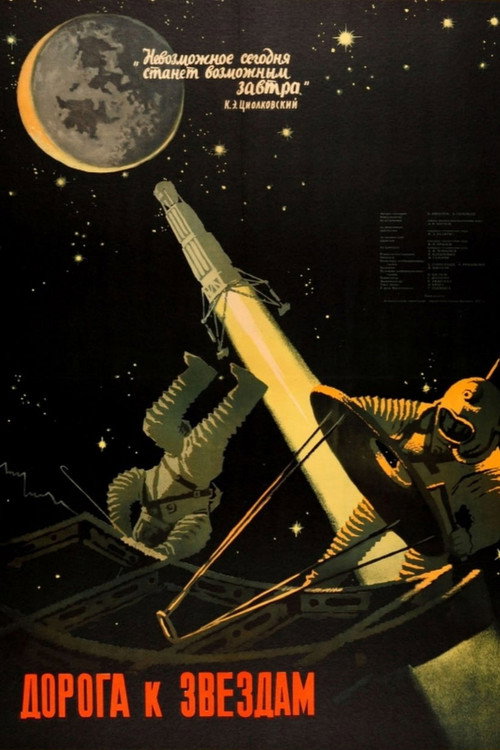
This film consists of three parts. The first dramatizes the life of the founder of Soviet astronautics, Konstantin Tsiolkovsky; the second describes the development of rocket technology; and the third visualizes the future with enactments of the first manned spaceflight, spacewalk, space station construction and humans on the moon.
1937
1989
1965

2013
1925
2022
1968
2016
No reviews yet. Be the first to share your thoughts on this movie!
Use the rating form above to leave a star rating and optional review.