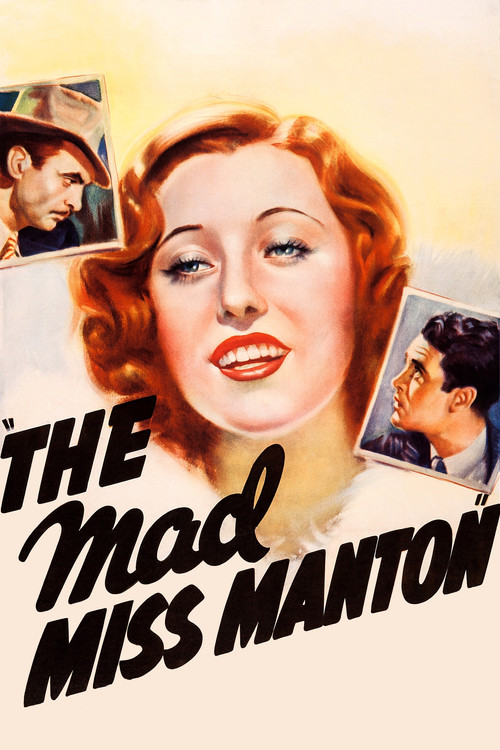
The Mad Miss Manton
1938
No user ratings available yet
Representation score: 1.5 out of 10
Representation Score
Limited
1938
PassedDirector
Crane Wilbur, Bobby Connolly
Runtime
57 minutes
Average Rating
No ratings yetNew Showbiz Analysis
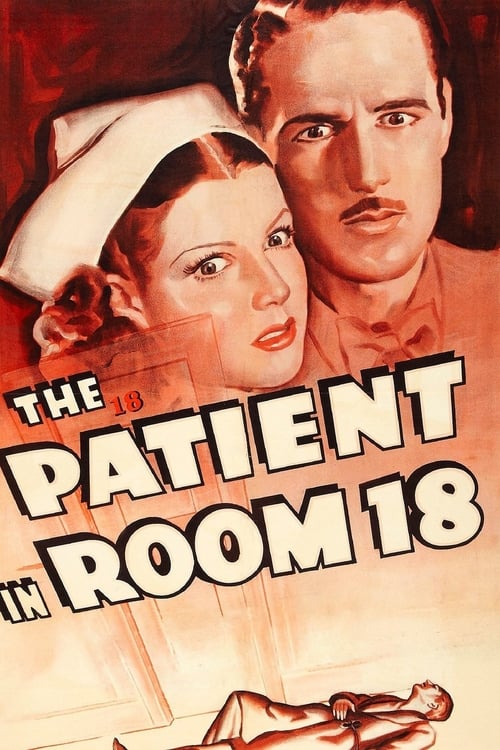
The Patient in Room 18 is a typical 1938 studio production that upholds the social norms of its time. It focuses on a conventional mystery and romance, prioritizing established narrative structures over social critique. While the film features a central female character, the story is largely driven by the male protagonist. Mental health issues are used for comedic purposes, which was common in the era’s storytelling. Overall, the film lacks significant racial, cultural, or LGBTQ+ diversity, reflecting the homogeneous casting and storytelling norms of the late 1930s Warner Bros. studio system.
Category Breakdown
The film adheres to the conventions of 1938, focusing on a heterosexual relationship between a male protagonist and a female nurse. There is no indication of same-sex intimacy or LGBTQ+ representation.
Ann Sheridan plays a central role as a nurse and confidante. However, the plot remains driven by the male protagonist's detective work, placing the female lead in a supporting role.
The production reflects the standard casting practices of the era. The narrative centers on a homogeneous social environment with no ethnically diverse characters mentioned.
The story uses a traditional mystery framework within a hospital setting. It reinforces established social institutions and follows a conventional restorative justice model without critiquing Western structures.
The protagonist's perceived mental instability is used as a comedic plot device. This approach treats neurodivergence as a light-hearted narrative element rather than a serious issue.
Present on Screen
Limited or Absent
Official Synopsis
Choreographer Bob Connolly and prolific screenwriter Crane Wilbur teamed up on the direction of Warner Bros.' The Patient in Room 18. Patric Knowles delivers a delightfully comic performance as Lance, an outwardly normal young man obsessed with detective stories. When his obsession threatens to lapse over into lunacy, Lance is sent to the hospital for a nice long rest. It isn't long before he gets mixed up in a genuine murder mystery, using his second-hand knowhow to solve the case. Up-and-coming Ann Sheridan is quite amusing as Lance's nurse and confidante, while the murderer is played by a fellow who is usually cast as the murder victim.
1938
1944
1936
1941
1945
1934
1946
1939
No reviews yet. Be the first to share your thoughts on this movie!
Use the rating form above to leave a star rating and optional review.