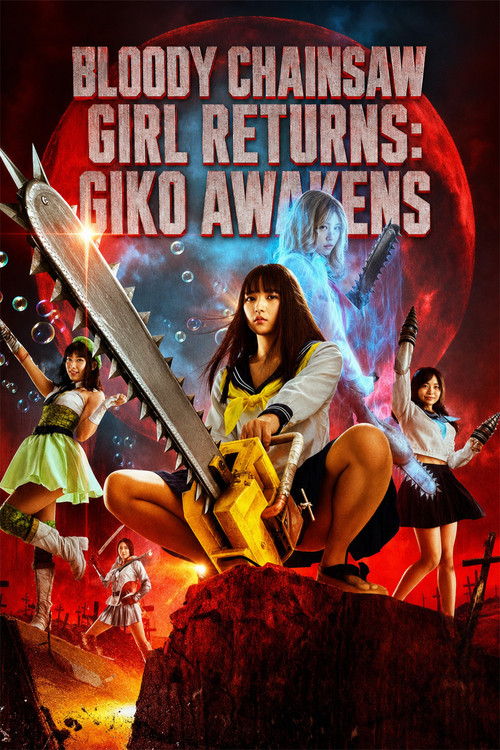
Bloody Chainsaw Girl Returns: Giko Awakens
2019
No user ratings available yet
Representation score: 4.2 out of 10
Representation Score
Fair
2016
Director
Hiroki Yamaguchi
Runtime
76 minutes
Average Rating
No ratings yetNew Showbiz Analysis
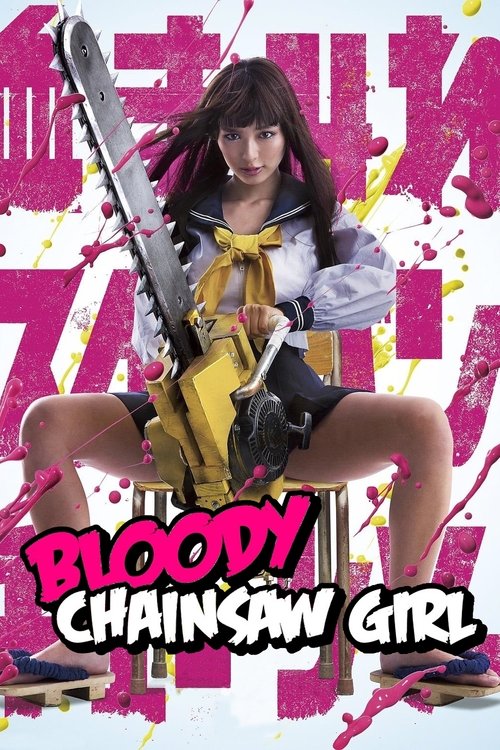
Bloody Chainsaw Girl stands out as a subversive horror film that primarily challenges traditional gender roles. By placing a powerful female protagonist at the center of a violent zombie outbreak, the film shifts the focus from passive victimhood to active, chaotic survivalism. Culturally, the film serves as a critique of societal structures. The protagonist's status as a delinquent allows the narrative to explore themes of alienation and resistance against institutional norms. This focus on non-conformity creates a strong foundation for character-driven rebellion. However, the film falls short in other areas. It lacks explicit LGBTQ+ representation or diverse casting, and the narrative does not address disability. While it excels at subverting gendered expectations, it remains a culturally specific and somewhat narrow production.
Category Breakdown
The film does not include explicit representations of LGBTQ+ identities or relationships that go beyond heterosexual norms. While the horror genre can sometimes hint at queer themes, there are no clear LGBTQ+ characters.
The movie challenges traditional gender roles by focusing on a female protagonist who is physically dominant and actively rejects the 'damsel in distress' stereotype through violent survival tactics.
Given its Japanese setting, the film's cast appears ethnically homogeneous, reflecting the cultural context of the production.
The story examines social alienation by portraying a delinquent protagonist who rebels against institutional norms. The narrative emphasizes individual rebellion over conformity within the school system.
There is no information indicating the inclusion of characters with visible or invisible disabilities in this work.
Present on Screen
Limited or Absent
Official Synopsis
Giko Nokomura is a delinquent girl and a senior in middle school. She struggles to kill zombies who were her classmates.
2019
2014
2019
2010
2008
2008

2009
2015
No reviews yet. Be the first to share your thoughts on this movie!
Use the rating form above to leave a star rating and optional review.