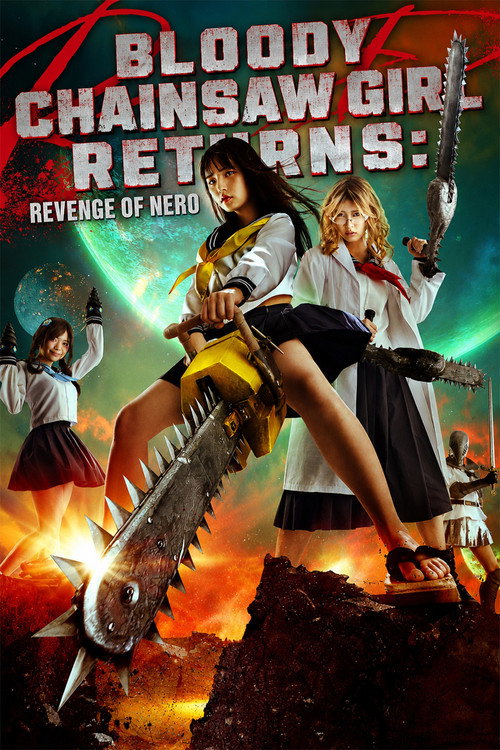
Bloody Chainsaw Girl Returns: Revenge of Nero
2019
No user ratings available yet
Diversity score: 5.3 out of 10
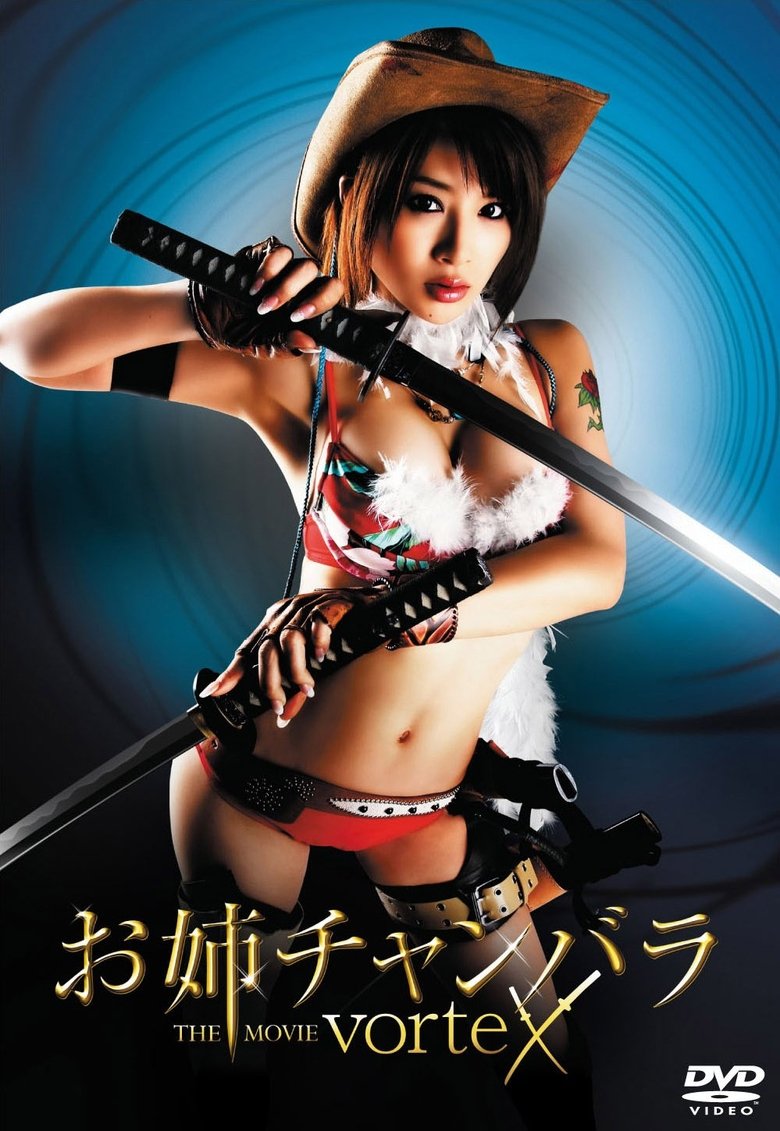
2009
Director
Tsuyoshi Shôji
Runtime
85 minutes
Average Rating
No ratings yetSynopsis
Sisters Aya and Saki put aside their rivalry and go toe-to-toe with Himiko and her band of zombies. The evil Himiko needs the blood of the young girls to restore her youth, while the sisters need to stop Himiko to save mankind ...
Overall Score
Fair
Category Breakdown
LGBTQ+ Representation
The film focuses on female-driven conflict and rivalry. While the genre often utilizes non-heteronormative aesthetics, there is no explicit depiction of queer identities or same-sex intimacy.
Gender Representation
The narrative is entirely female-centric, placing women in roles of extreme physical agency and combat expertise. It disrupts traditional tropes by making female strength the primary driver of the plot.
Racial & Ethnic Diversity
The production focuses on Japanese folklore and horror tropes. The character dynamics appear to follow a relatively homogeneous ethnic framework without evidence of multicultural blending.
Religious & Cultural Diversity
The story engages with a visceral, survivalist ethos rather than a codified religious framework. The conflict centers on primal needs like youth restoration and human survival.
Disability Representation
There is no discernible evidence regarding the portrayal of physical or neurodivergent disabilities within the narrative.
Strengths
Areas for Improvement
AI Analysis
The film excels at subverting gender hierarchies by centering the survival of mankind on the agency of two sisters. This shift from the traditional male protector trope provides a strong foundation for female empowerment in action cinema. However, the film lacks intersectional depth. The racial and ethnic landscape remains homogeneous, focusing strictly on localized Japanese folklore without broader multicultural engagement. Additionally, the absence of overt LGBTQ+ identities limits the narrative's queer architecture. Ultimately, the film is a specialized genre piece. It prioritily emphasizes female combat agency and survivalist morality over a wide spectrum of social or identity-based diversity.
2019
1995
2017
2019
2007
2020
2007

2014
2006
2015
2012
2016
No reviews yet. Be the first to share your thoughts on this movie!
Use the rating form above to leave a star rating and optional review.