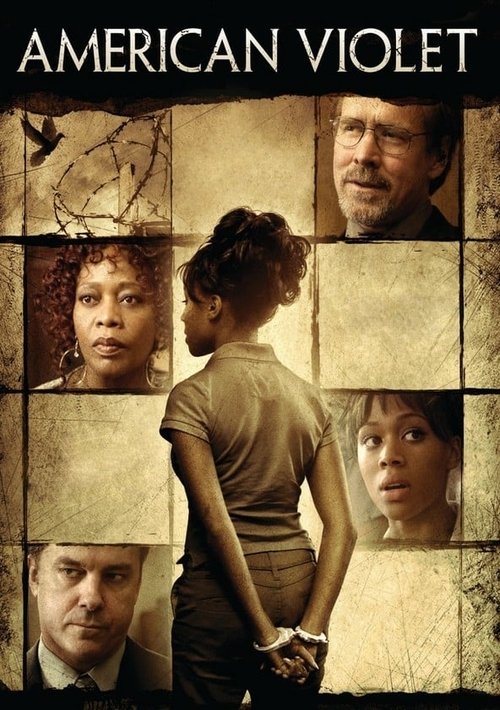
American Violet
2008
No user ratings available yet
Representation score: 4.7 out of 10

Representation Score
Fair
2004
RDirector
John Shulman, Jeanne-Marie Almonor
Runtime
104 minutes
Average Rating
No ratings yetNew Showbiz Analysis
Justice (2004) stands out by focusing on a Black protagonist and his community within an urban setting, challenging the predominantly white-centric narratives found in similar films. The film delves into the complexities of institutional corruption and its impact on community structures. However, the story remains confined to traditional family dynamics and lacks representation of LGBTQ+ and disabled characters. While it questions established legal hierarchies, it adheres to more conventional social frameworks.
Category Breakdown
The film does not include any explicit LGBTQ+ characters or non-straight relationships. The story focuses primarily on the protagonist's career and his family life.
Sharice is portrayed as a strong leader who makes her own decisions, rather than a passive character. Her choices highlight her role in balancing personal and political commitments.
The film centers around a Black protagonist living in an urban environment. This shifts the typical focus away from white characters and highlights the experiences of people of color.
The story critiques Western institutions by portraying the legal system as corrupt. It examines the tension between community activism and the pursuit of a stable middle-class lifestyle.
The film does not feature any characters dealing with physical, neurodivergent, or mental health conditions. There is no representation of disabilities in the narrative.
Present on Screen
Limited or Absent
Official Synopsis
Public defender Carter (Roger Smith) has had all he can take dealing with a corrupt judicial system. Over the objections of his wife, Sharice (Monica Calhoun), he quits his job, opens an inner-city law office and organizes a group of activists out to change the system. In a moment of truth, Sharice must decide whether she'll stay with her husband and fight the good fight or move to the suburbs with their two young children.
2008

2020

2016

1989

1999

2011
1985

2012
No reviews yet. Be the first to share your thoughts on this movie!
Use the rating form above to leave a star rating and optional review.