
El arte de engañar
1972
No user ratings available yet
Representation score: 4.7 out of 10
Representation Score
Limited
1971
Director
Lucas Demare
Runtime
100 minutes
Average Rating
No ratings yetNew Showbiz Analysis
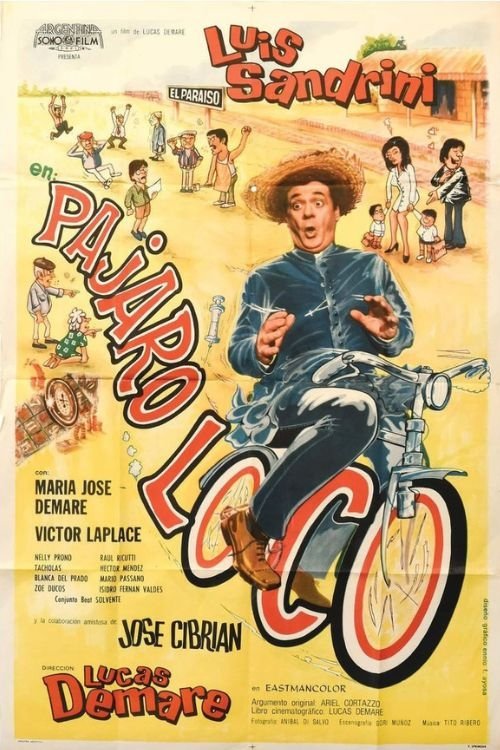
Pájaro loco is a conventional mid-century drama that relies on established social archetypes. The central conflict between a religious figure and a group of scammers follows traditional storytelling clichés rather than attempting to disrupt systemic hierarchies. The film's structure suggests a reliance on the moral authority of the clergy and the social disruption of con artists. This focus limits the scope for diverse representation or nuanced social critique. Overall, the production reflects the standard social compositions and cinematic conventions of 1971 Argentine cinema, prioritizing character-driven morality over modern inclusive narratives.
Category Breakdown
The film centers on a moral conflict between a priest and scammers. There is no evidence of LGBTQ+ identities or narratives that challenge the assumption that everyone is straight or cisgender.
The story focuses on a male-dominated conflict. Without more detail, the narrative appears to prioritize men's control over the story and traditional gender roles.
As a 1971 Argentine production, the film likely reflects regional demographics. It lacks evidence of intentional racial exploration or metaphors to address race.
The story uses religious institutions as a central framework for morality. The priest's role suggests the film operates within traditional social structures rather than critiquing them.
The synopsis provides no indication of characters with visible or invisible disabilities.
Present on Screen
Limited or Absent
Official Synopsis
A gambling priest opposes a group of scammers.
1972

1978

1962
1939

1979

2012
1974

1966
No reviews yet. Be the first to share your thoughts on this movie!
Use the rating form above to leave a star rating and optional review.