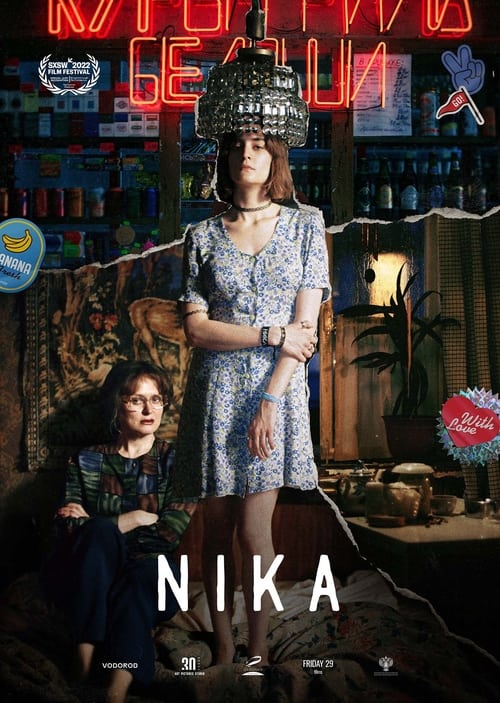
Nika
2022
No user ratings available yet
Diversity score: 6.3 out of 10

2012
Director
Mariya Saakyan
Runtime
96 minutes
Average Rating
No ratings yetSynopsis
Based on the Armenian ‘Sharakan’, a nine-part song that brings us gradually closer to meaning, Maria Saakyan’s new film further develops the poetic invention apparent in her first feature, The Lighthouse. Focusing on the world of a 14-year-old girl, Evridika, who is experiencing the first extremes of adolescent emotion, it makes effective and imaginative use of her private world centred on internet chat rooms and mobile phone recordings.
Overall Score
Good
Category Breakdown
LGBTQ+ Representation
The film explores the private digital world of internet chat rooms. While these spaces often host identity exploration, there is no explicit confirmation of queer themes or character arcs.
Gender Representation
The narrative centers on the agency and emotional complexity of a 14-year-old girl. It avoids traditional female passivity by making her subjective experience the primary cinematic driver.
Racial & Ethnic Diversity
The film is rooted in Armenian heritage and utilizes traditional hymns. While the cast appears ethnically homogeneous, it provides a distinct non-Western framework.
Religious & Cultural Diversity
The story uses the nine-part Sharakan musical structure to guide its progression. This integrates Armenian spirituality and non-Western metaphysical frameworks into the narrative architecture.
Disability Representation
There is no mention of characters navigating physical, sensory, or neurodivergent disabilities within the provided narrative details.
Strengths
Areas for Improvement
AI Analysis
The film distinguishes itself by rejecting Western narrative pacing in favor of a spiritual, Armenian-centered structure. By using the Sharakan hymns as a foundation, it prioritizes a non-Western metaphysical perspective. While the film excels in cultural specificity and female agency, it lacks explicit evidence regarding LGBTQ+ themes or disability representation. The focus remains tightly on the protagonist's internal psychological landscape. Ultimately, the work functions as a specialized piece of cultural cinema that favors individual, subjective truth over conventional dramatic tropes.
2022

2011
2013
2006

2011
2017

2015
2018
2012

2005

2012

2016
No reviews yet. Be the first to share your thoughts on this movie!
Use the rating form above to leave a star rating and optional review.