
Indiscreet
1931
No user ratings available yet
Representation score: 1.7 out of 10
Representation Score
Minimal
1931
NRDirector
John M. Stahl
Runtime
91 minutes
Average Rating
No ratings yetNew Showbiz Analysis
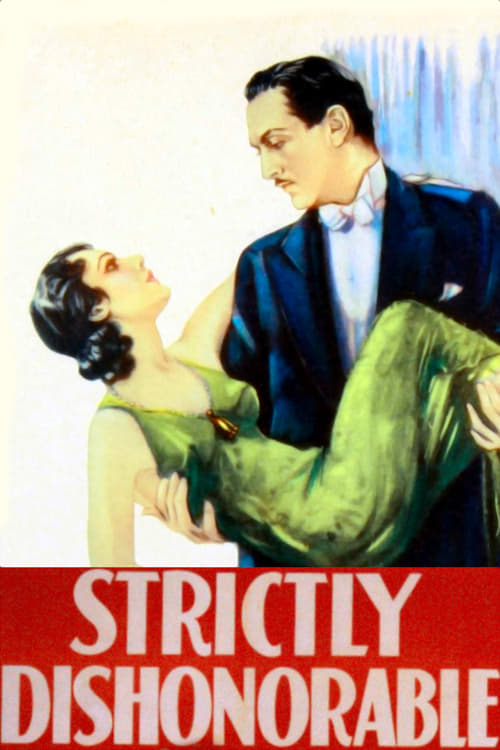
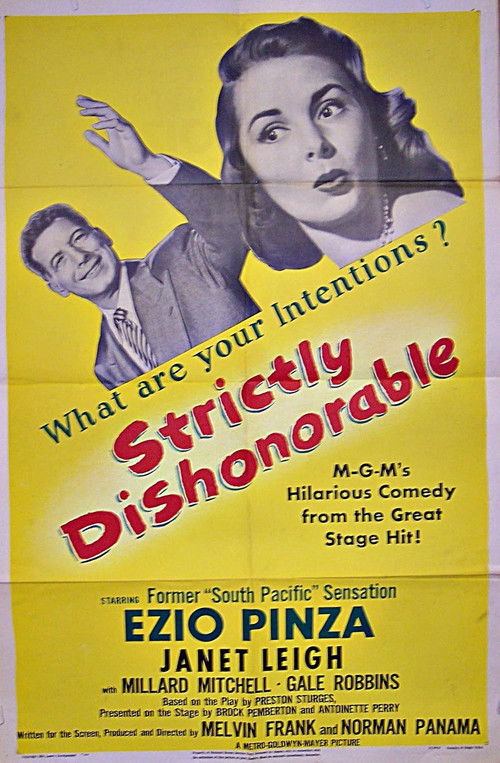
Strictly Dishonorable is a product of early 1930s Hollywood, focusing heavily on traditional romantic archetypes. While it lacks complexity in reflecting multiple aspects of identity, it provides a foundation for character study through its female-centric narrative. The film's strength lies in its focus on the female protagonist's decision-making, which drives the plot and offers insight into the emotional complexities often found in John M. Stahl's work. However, the film is limited by the era's homogeneous casting norms. It lacks representation across most diversity categories, adhering to a narrow social and romantic scope.
Category Breakdown
The film follows a traditional romantic triangle structure. There is no evidence of LGBTQ+ identities or same-sex relationships.
The story centers on a female protagonist navigating significant life choices. She serves as the primary driver of the plot's central conflict.
The narrative focuses on regional and class distinctions. It provides no evidence of racial diversity or non-Anglo-Saxon characters.
The plot engages with class dynamics and the tension between provincialism and cosmopolitanism. It reinforces traditional social hierarchies and romantic ideals.
There is no evidence of characters with visible or invisible disabilities within the narrative.
Present on Screen
Limited or Absent
Official Synopsis
A hopelessly silly young flibbertigibbet from Mississippi is faced with the choice of her poor, boorish New Jersey boyfriend or a dashing Opera star, a man of experience.
1931
1934
1938
1933
1931
1910

1931
1951
No reviews yet. Be the first to share your thoughts on this movie!
Use the rating form above to leave a star rating and optional review.