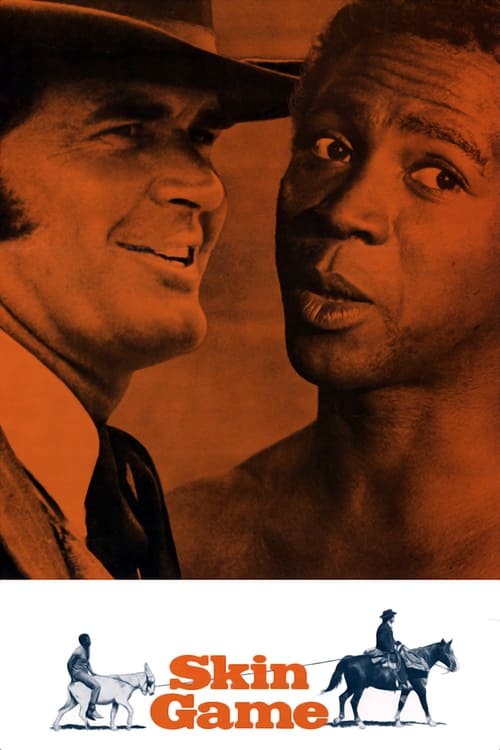
Skin Game
1971
No user ratings available yet
Diversity score: 4.3 out of 10
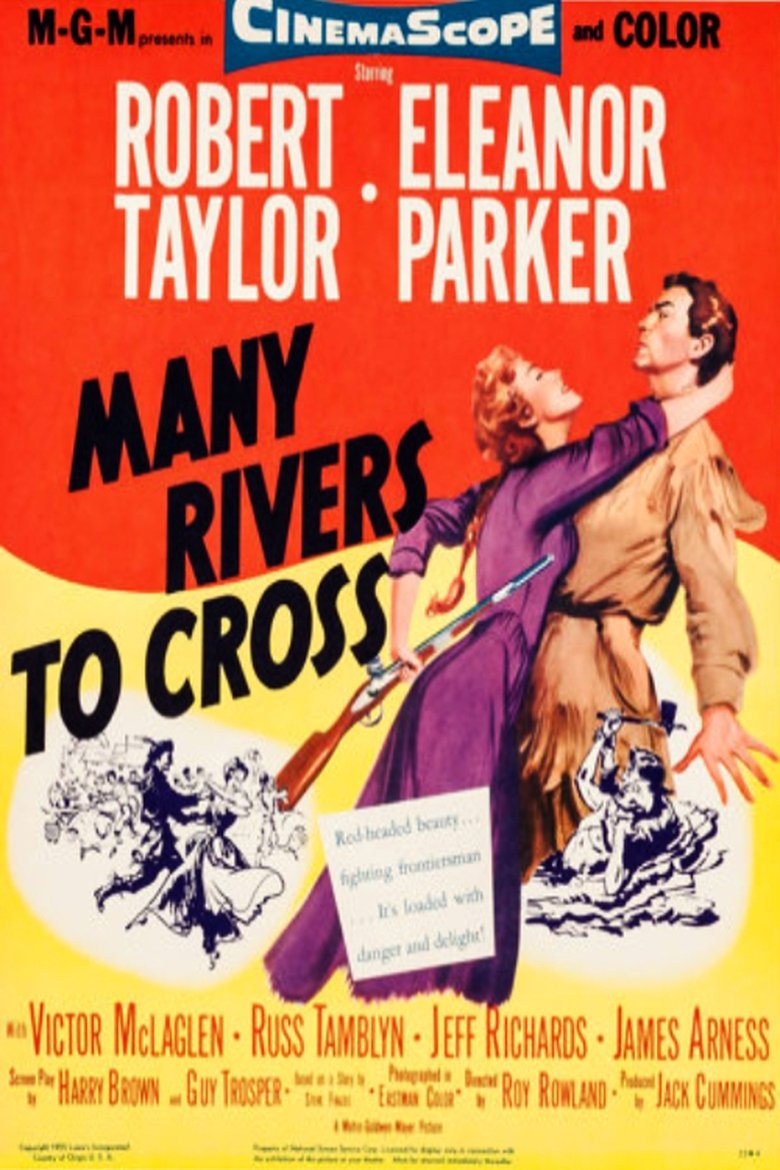
1955
Director
Roy Rowland
Runtime
95 minutes
Average Rating
No ratings yetSynopsis
Packaged and sold as an outdoor actioner, Many Rivers to Cross is as much a comedy as anything else. Robert Taylor stars as 18th century trapper Bushrod Gentry, who is himself entrapped into marriage by the spunky Mary Stuart Cherne (Eleanor Parker). Escaping his marital responsibilities (which were impressed upon him on threat of death), Gentry heads into the North Country, with Mary in hot pursuit. Hero and heroine spend the rest of the picture taking turns rescuing each other from hostile Indians. Some of the humor is predicated upon the wholesale slaughter of the "redskins", and as such is a bit hard to take when seen today. Supporting Taylor and Parker are Victor McLaglen as the heroine's burly father, and TV-stars-to be James Arness (Gunsmoke) and Russell Johnson and Alan Hale Jr. (Gilligan's Island).
Overall Score
Fair
Category Breakdown
LGBTQ+ Representation
The film contains no LGBTQ+ characters or non-heteronormative identities. The story focuses exclusively on the romantic and survivalist dynamics of the central protagonists.
Gender Representation
The narrative operates within 1790s gendered frameworks. While the female lead shows significant agency and determination, the broader depiction of women reflects the era's systemic vulnerabilities.
Racial & Ethnic Diversity
The film centers the agency of Black characters, elevating them from background figures to primary drivers of the plot. It critiques racial hierarchies by focusing on the struggle against the plantation economy.
Religious & Cultural Diversity
The film critiques the oppressive legal and economic structures of the Antebellum South. It also portrays spiritualism as a nuanced tool for resilience among marginalized populations.
Disability Representation
There is no evidence of characters with visible or invisible disabilities driving the narrative or serving as central plot devices.
Strengths
Areas for Improvement
AI Analysis
Many Rivers to Cross distinguishes itself from standard 1950s Westerns by reframing the frontier as a site of systemic friction rather than simple expansion. It successfully disrupts the 'civilizing' myth by highlighting the brutal realities faced by those excluded from American liberties. The film's primary strength is its focus on racial agency and its critique of institutionalized oppression. By centering freedom-seekers, the narrative transforms the genre's typical focus into a study of the pursuit of liberty against oppressive social hierarchies. However, the film remains limited by its historical period's constraints. Gender dynamics are tethered to traditional frameworks, and the lack of LGBTQ+ representation or disability-focused narratives keeps the diversity profile centered on specific historical struggles.
1971
1970
1971

1972
No reviews yet. Be the first to share your thoughts on this movie!
Use the rating form above to leave a star rating and optional review.