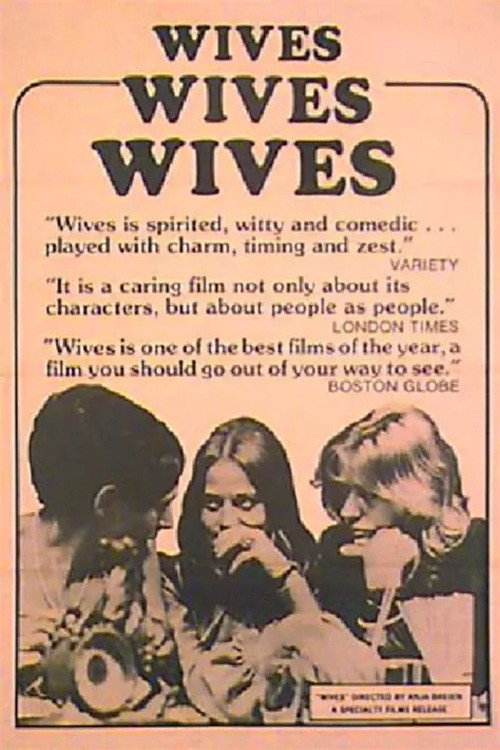
Wives
1975
No user ratings available yet
Representation score: 4.4 out of 10

Representation Score
Fair
1971
XDirector
Paul Morrissey
Runtime
97 minutes
Average Rating
No ratings yetNew Showbiz Analysis
Paul Morrissey's work offers a radical reevaluation of gendered power dynamics by highlighting women who reject traditional submissive roles in favor of political autonomy. This film serves as a powerful artifact of feminist discourse. However, the film's impact is constrained by its narrow focus on a homogeneous, white, middle-class demographic, limiting its broader social relevance. Despite this, the film effectively critiques Western institutional norms and explores the struggle for autonomy against established social hierarchies. Ultimately, while the film excels in challenging traditional gender roles and institutional norms, it falls short in representing diverse racial and ethnic backgrounds.
Category Breakdown
The film centers on same-sex relationships among the main characters, exploring themes of female autonomy and resistance to patriarchal structures.
The story challenges traditional gender roles by focusing on women who reject domestic life and marriage, emphasizing their political independence and dissatisfaction with male-dominated stability.
The narrative primarily features a homogeneous, white, middle-class urban demographic, lacking significant diversity in racial or ethnic backgrounds.
The film critiques Western institutions such as the nuclear family and capitalism, prioritizing secular, communal ideologies over traditional religious or patriotic values.
There is no significant evidence regarding the portrayal of physical or neurodivergent disabilities within the narrative.
Present on Screen
Limited or Absent
Official Synopsis
Candy is an aloof heiress caught in an unhappy relationship with her brother. Jackie is a virginal intellectual who believes women are oppressed in contemporary American society. And Holly is a nymphomaniac who has come to loathe men, despite her attraction to them. Together, they join a militant feminist group, P.I.G. (Politically Involved Girls), but their newfound liberation doesn't make them any happier.
1975
1967
2020
2020
1995
1977
1973
1982
No reviews yet. Be the first to share your thoughts on this movie!
Use the rating form above to leave a star rating and optional review.