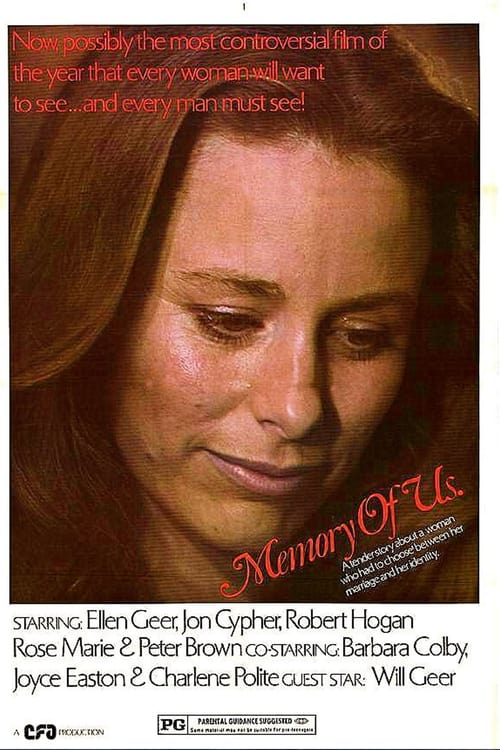
Memory of Us
1974
No user ratings available yet
Representation score: 1.4 out of 10

Representation Score
Minimal
1965
Director
Larry Kent
Runtime
88 minutes
Average Rating
No ratings yetNew Showbiz Analysis
The film presents a 1965 suburban household where the wife feels trapped by domestic duties. The narrative focuses on her psychological decline and eventual affair with a professor. Marriage is depicted as a source of stagnation rather than fulfillment. The cast is exclusively white, and the social world is bounded by class and gender expectations. Men hold professional authority, while women manage the home and bear the emotional weight of the family’s friction. This reflects the mid-twentieth century social structures without challenging them. Traditional institutions like marriage and suburban life are treated as obstacles to personal happiness. The film does not feature LGBTQ+ characters, disability, or racial diversity. It offers a specific, period-accurate view of domestic dissatisfaction.
Category Breakdown
No same-sex romance or queer characters appear in the plot. The narrative focuses entirely on heterosexual relationships and marital dynamics. Non-heteronormative intimacy is absent from the dialogue and scenes.
Gwen drives the emotional arc but remains confined to domestic labor. Doug holds professional power and treats marital intimacy as a transactional duty. The film highlights the imbalance between professional authority and home management.
The cast and dialogue center exclusively on white characters. No non-white actors or ethnic identities are named in the credits. The social world is bounded by the era's lack of racial diversity.
Marriage and suburban domesticity are framed as suffocating traps. Class is noted through the father’s mill work and the mother’s financial anxiety. The film presents a period-accurate view of domestic dissatisfaction.
No characters with physical, sensory, or cognitive disabilities appear. The father’s age is mentioned, but no disability is depicted. The narrative does not address disability experiences or barriers.
Present on Screen
Limited or Absent
Official Synopsis
A frustrated, despairing housewife and young mother of two, imprisoned by her domestic world and ignored by her succesful husband, becomes increasingly bereft of hope and a means of escape.
1974

1964
1958

1952

1972

1974

1950

2016
No reviews yet. Be the first to share your thoughts on this movie!
Use the rating form above to leave a star rating and optional review.