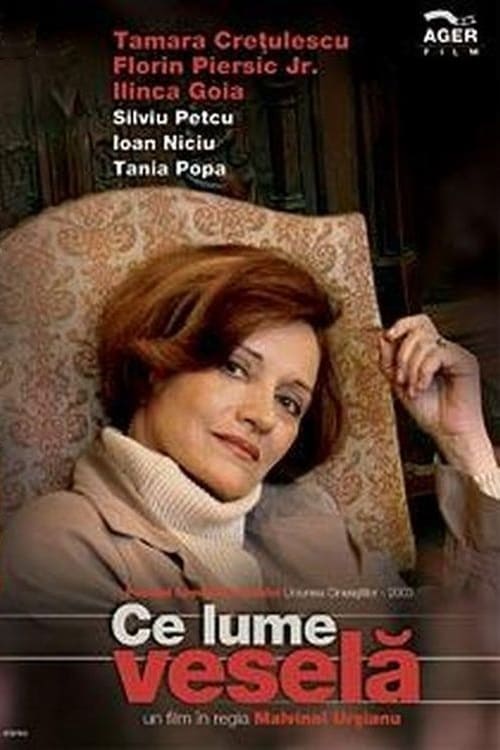
What a Happy World
2003
No user ratings available yet
Representation score: 4.2 out of 10

Representation Score
Fair
1983
Director
Gheorghe Turcu
Runtime
80 minutes
Average Rating
No ratings yetNew Showbiz Analysis
Cine iubește și lasă is a character study that elevates women's ability to drive the story through its protagonist, Andra. By placing a woman in a position of professional authority as a magazine editor, the film moves beyond traditional romantic clichés to explore the tension between public advice and private instability. While the film presents a nuanced view of modern womanhood and intellectual autonomy, it lacks broader diversity. The narrative remains largely confined to the demographic and social norms of its 1983 Romanian context. Ultimately, the film offers a moderate level of representation by focusing on the psychological complexities of a woman navigating her social and professional roles, even if it lacks explicit diversity in other identity categories.
Category Breakdown
The story focuses on traditional counseling and does not include any explicit evidence of non-straight relationships or same-sex intimacy.
The film centers a female professional who holds intellectual authority. It challenges passive stereotypes by highlighting a woman's management of complex emotional and professional roles.
The film likely adheres to the demographic norms of 1980s Romania. There is no evidence of multi-ethnic casting or diverse ethnic representation.
The story explores subjective morality through the protagonist's role as a mediator. It emphasizes individual psychological truth over prescribed social or religious morality.
There is no information available regarding the presence of characters with visible or invisible disabilities.
Present on Screen
Limited or Absent
Official Synopsis
Andra is a redactor at a women's magazine. The readers are contacting her for help in thir relationships. But Anda has problems on her own.
2003
1980

1982
1977
1979
1980
1968
1978
No reviews yet. Be the first to share your thoughts on this movie!
Use the rating form above to leave a star rating and optional review.