Bellboy Donald
1942
No user ratings available yet
Representation score: 0.4 out of 10
Representation Score
Limited
1948
NRDirector
Clyde Geronimi
Runtime
7 minutes
Average Rating
No ratings yetNew Showbiz Analysis
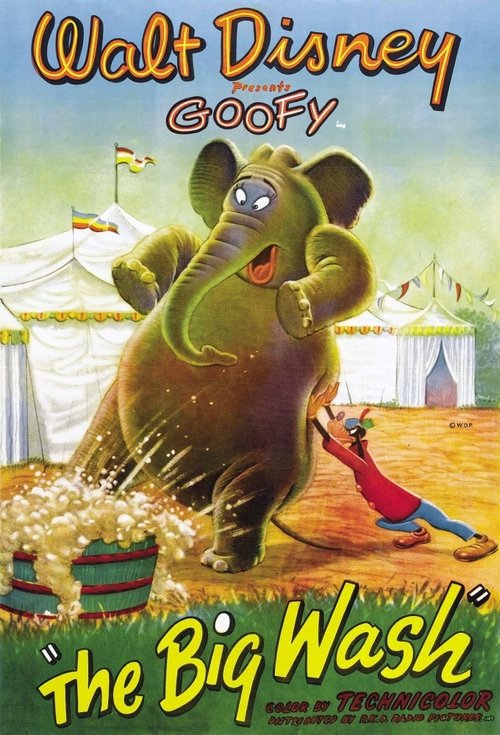
The Big Wash is a classic mid-century slapstick short that emphasizes physical comedy over social commentary. The narrative centers on Goofy's chaotic efforts to clean a town, using a generic crowd to create mayhem. Adhering to the typical studio models of 1948, the film does not intentionally engage with diverse identities. Characters are archetypical within a homogeneous setting, avoiding any disruption of social hierarchies or representation of underrepresented groups.
Category Breakdown
The film follows a traditional framework and does not include any depictions of same-sex relationships or non-cisgender identities.
Female characters lack significant roles that drive the story. The film does not challenge traditional gender roles.
The characters are portrayed generically, without reflecting diverse racial backgrounds or blended identities.
Slapstick humor is used to depict civic order falling apart. The story follows conventional storytelling without critiquing Western institutions.
No characters with disabilities are featured. Characters mainly serve as comedic props.
Present on Screen
Limited or Absent
Official Synopsis
Goofy tries his hand at a big job in the circus: feeding and washing the elephant.
1942
1945
1941
1941
1959
1939
1939
1940
No reviews yet. Be the first to share your thoughts on this movie!
Use the rating form above to leave a star rating and optional review.