
The Boy Who Stole a Million
1960
No user ratings available yet
Representation score: 0.6 out of 10
Representation Score
Minimal
1947
NRDirector
Charles Crichton
Runtime
82 minutes
Average Rating
No ratings yetNew Showbiz Analysis
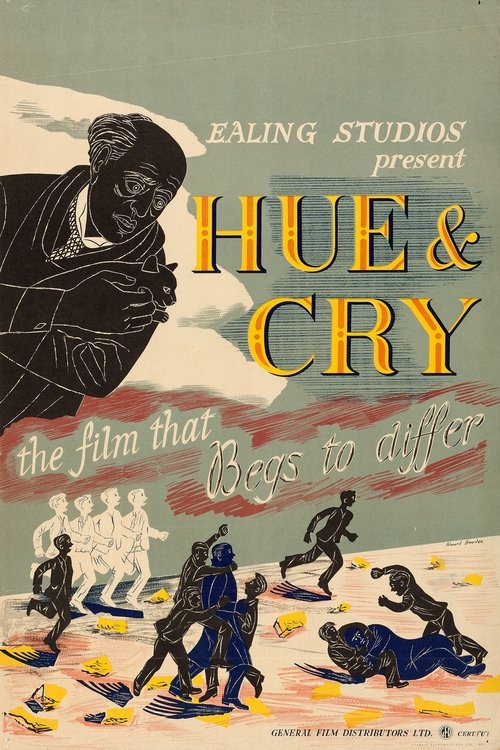
Hue and Cry is a typical product of its 1947 era, prioritizing plot-driven comedy and crime mechanics over social critique. The film reinforces the demographic and gender norms of post-war Britain, offering little engagement with diverse identities. The narrative structure centers on male-dominated hierarchies, focusing on the cunning of criminals and the energy of street boys. This leaves little room for diverse perspectives or the inclusion of underrepresented identities. While it serves as a foundational Ealing comedy, the film lacks the complexity needed to challenge the social frameworks of its time, resulting in a narrow representational landscape.
Category Breakdown
The film focuses on a male-dominated criminal underworld and youth subculture, with no representation of non-straight identities or same-sex relationships.
The narrative centers on the actions of male characters, particularly street boys and masterminds, while women play minor roles without driving the main plot.
The film depicts a homogeneous British society, lacking a multi-ethnic cast or diverse representation in its mid-century London setting.
The story operates within a traditional social order, focusing on crime mechanics and framing youth rebellion through a comedic lens.
There is no representation of characters with visible or invisible disabilities, adhering to the physical archetypes of the 1940s crime-comedy genre.
Present on Screen
Limited or Absent
Official Synopsis
A gang of street boys foil a master crook who sends commands for robberies by cunningly altering a comic strip's wording each week, unknown to writer and printer. The first of the Ealing comedies.
1960
1951
1954
1960
1953
1955

1951
1958
No reviews yet. Be the first to share your thoughts on this movie!
Use the rating form above to leave a star rating and optional review.