Café
2011
No user ratings available yet
Diversity score: 4.3 out of 10
2016
Director
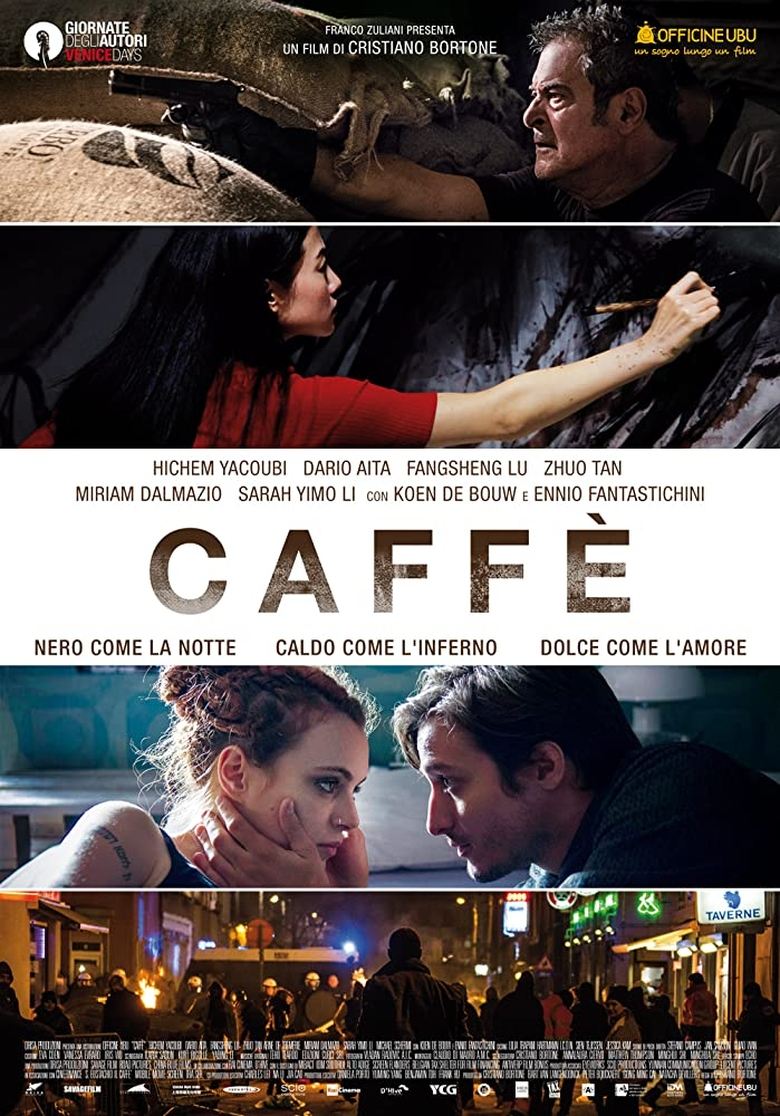
Cristiano Bortone
Runtime
110 minutes
Average Rating
No ratings yetSynopsis
For the sommeliers, coffee has three flavors: bitter, sour and a bit of fragrant towards the end. Through the common element of this so evocative product, this movie tells three stories set in three very different parts of the world. In Belgium, during some riots, a precious coffeepot gets stolen from Hamed's shop. He'll decide, once discovers the identity of the thief, to take vengeance alone. In Italy, Renzo, a young Latte Art expert, is involved in a robbery in a coffee shop, but things don't go as planned. In China, Ren Fei, a brilliant manager, finds out that his factory risks destroying a valley in the Yunnan, the beautiful region on the border with Laos.
Overall Score
Fair
Category Breakdown
LGBTQ+ Representation
The film lacks explicit depictions of non-heteronormative identities or same-sex intimacy. The narrative focus centers on external conflicts like theft and environmental crises rather than queer identity.
Gender Representation
While the inclusion of a female manager in China suggests a departure from traditional roles, the Belgian and Italian segments lean toward male-centric stories of vengeance and crime.
Racial & Ethnic Diversity
The film excels by centering stories in Belgium, Italy, and China. This global architecture disrupts Eurocentric storytelling by exploring diverse landscapes and non-Western cultural contexts.
Religious & Cultural Diversity
The narrative offers sophisticated cultural critique, particularly through themes of industrial capitalism in China and social instability during Belgian riots. It prioritizes ecological and moral complexities.
Disability Representation
There is no evidence of visible or invisible disabilities being portrayed as central to the character arcs within the film's narrative.
Strengths
Areas for Improvement
AI Analysis
Caffè succeeds as a transnational tapestry that avoids a single Western perspective. By using coffee as a sensory bridge, the film connects disparate geopolitical landscapes, offering a fragmented yet cohesive view of the global human experience. The strength of the work lies in its racial and ethnic breadth. Moving the lens toward the Yunnan region of China provides a significant departure from traditional dramatic focuses, allowing for a critique of industry and ecology. However, the film remains limited in its exploration of identity. The lack of LGBTQ+ representation and the male-leaning narrative drivers in the European segments prevent a more intersectional impact.
2011
2012
2012
2013

2010
1996
1997
2013

2015
2009
2008
2013
No reviews yet. Be the first to share your thoughts on this movie!
Use the rating form above to leave a star rating and optional review.