
The Hasty Heart
1949
No user ratings available yet
Representation score: 2.5 out of 10
Representation Score
Limited
1951
ApprovedDirector
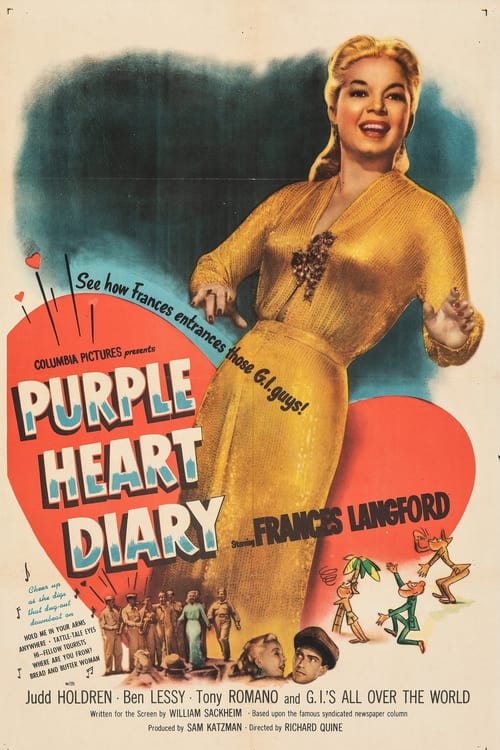
Richard Quine
Runtime
73 minutes
Average Rating
No ratings yetNew Showbiz Analysis
Purple Heart Diary is a quintessential product of its 1951 temporal context. It utilizes a sentimentalist framework common in post-war cinema, focusing on morale-boosting and patriotic themes through a trio of entertainers and convalescing soldiers. The film adheres strictly to the social hierarchies and narrative conventions of the early 1950s. It prioritizes traditional romanticism and institutional stability over any form of social critique or multi-layered representation. Ultimately, the work functions as a conventional drama that reinforces established social roles rather than challenging them.
Category Breakdown
The film focuses on traditional romantic relationships between a soldier and a nurse. There is no indication of LGBTQ+ identities or critiques of the assumption that everyone is straight or cisgender.
Female characters play traditional nurturing and entertaining roles. The story centers on a male soldier's emotional journey, maintaining a focus on masculine experiences.
The film likely reflects the homogeneous casting standards of the early 1950s. It appears to center on a predominantly white, Anglo-Saxon demographic typical of the era.
The story emphasizes mid-century Western values, patriotism, and institutional stability. It leans into the era's preference for communal and institutional cohesion.
Wounded soldiers introduce themes of physical impairment. These portrayals function as melodramatic catalysts for romantic subplots rather than nuanced explorations of personal ability to act.
Present on Screen
Limited or Absent
Official Synopsis
A trio of singers entertaining hospitalized soldiers during WWII encourage a wounded soldier in his love for a nurse.
1949
1958

1952
1956

1942

1959

1950

1958
No reviews yet. Be the first to share your thoughts on this movie!
Use the rating form above to leave a star rating and optional review.