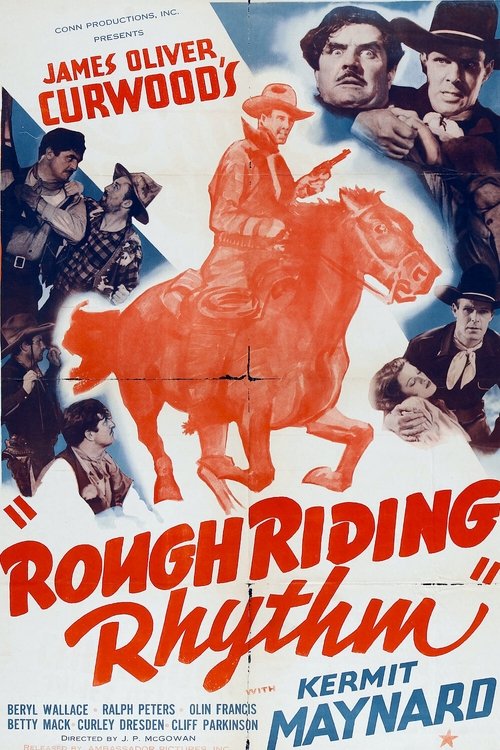
Rough Riding Rhythm
1937
No user ratings available yet
Representation score: 1.4 out of 10
Representation Score
Minimal
1934
NRDirector
David Howard
Runtime
64 minutes
Average Rating
No ratings yetNew Showbiz Analysis
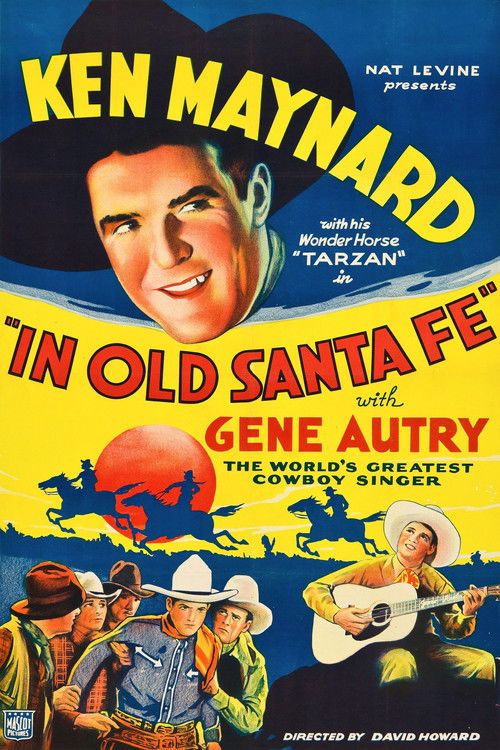
In Old Santa Fe is a quintessential 1930s B-Western that functions to reinforce established social and cultural hierarchies. The film relies heavily on traditional genre clichés, focusing on masculine-driven conflict and the restoration of order through individual heroism. The narrative structure is built upon a foundation of racial homogeneity and straight-centered social structures. It avoids any attempt to deconstruct or critique the institutions of the American West, instead affirming the moral clarity of the heroic archetype. Ultimately, the film serves as a reinforcement of the era's status quo. It lacks complexity in reflecting multiple aspects of diversity, presenting a world defined by traditional authority and rigid gender roles.
Category Breakdown
The film operates within a strictly straight-centered framework. There is no evidence of diverse gender identities or same-sex relationships present in the narrative.
Male characters drive the entire plot, centered around the conflict between Kentucky, Chandler, and Tracy. Female characters play secondary, supportive roles that do not challenge patriarchal structures.
The story focuses on a homogeneous cast of settlers and outlaws. It lacks meaningful roles for non-white characters, relying on Anglo-centric perspectives typical of the era.
The narrative promotes traditional Western values and frontier justice. It reinforces the legitimacy of traditional authority and the socioeconomic structures of the ranching frontier.
There are no visible or invisible disabilities portrayed. Characters are depicted solely through the lens of physical capability required for the Western genre.
Present on Screen
Limited or Absent
Official Synopsis
Gangster Chandler and his accomplice Tracy arrive at a dude ranch. Cowboy Kentucky arrives at the same time. When Tracy double-crosses his boss and has the stage robbed, Kentucky finds the outlaws and brings them in. Tracy frames him for the murder of the driver but his pal Cactus gets him out of jail. He returns just as Chandler shoots Tracy and Kentucky finds himself arrested for another murder.
1937
1947
1947
1940
1950
1931
1930
1929
No reviews yet. Be the first to share your thoughts on this movie!
Use the rating form above to leave a star rating and optional review.