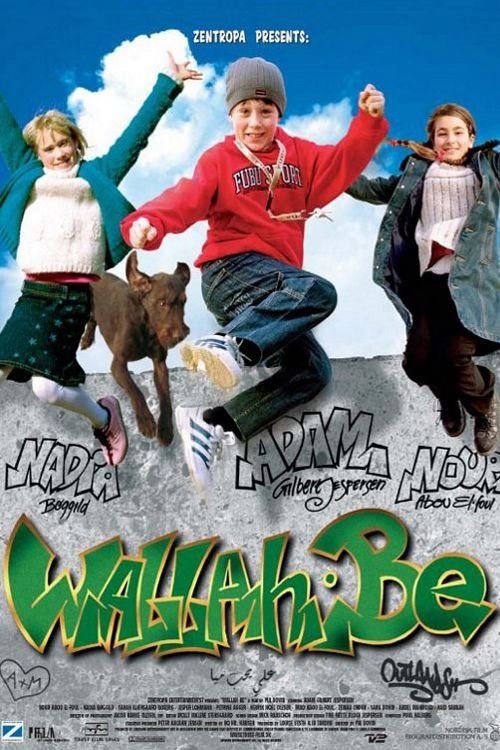
We Can Be Heroes!
2002
No user ratings available yet
Representation score: 5.3 out of 10
Representation Score
Good
2002
Not RatedDirector
Pia Bovin
Runtime
82 minutes
Average Rating
No ratings yetNew Showbiz Analysis
Wallah Be offers a pluralistic view of suburban life by centering a multicultural friendship group. The narrative integrates diverse characters into the core social fabric of the after-school club. The film's strength lies in its challenge of traditional gender hierarchies. Rather than a solitary male hero, the resolution is driven by collaborative peer dynamics and the influence of young girls. However, the film lacks explicit representation regarding LGBTQ+ identities or disability. While it succeeds in portraying social integration, it does not engage in overt political deconstruction or specific identity-based critiques.
Category Breakdown
The film focuses on childhood friendships in a suburban setting. There is no explicit depiction of LGBTQ+ identities or themes present in the narrative.
The story challenges traditional male-centric clichés by centering the plot on the influence of girls like Annika and Fatima. Their actions drive the protagonist toward active problem-solving.
Meaningful inclusion is shown through Fatima, who represents a multicultural background within a Danish suburb. This integration highlights diverse peer dynamics in a shared social space.
The narrative adopts a secular, social-realist framework. It prioritizes the autonomy of children and grassroots ability to act over traditional religious or institutional authority structures.
No visible or invisible disabilities are mentioned as central to the character arcs or the primary plot.
Present on Screen
Limited or Absent
Official Synopsis
Aksel is ten years old. He lives with his mother and elder sister on a housing estate in the suburbs. There's a week's holiday from school coming up and Aksel reluctantly must spend the day time at his local after-school club. A stray dog and a song contest organized by the club are the start of a friendship between Aksel and two girls, Annika and Fatima. But things go wrong and Fatima is grounded, leaving Aksel to take matters into his own hands in order to rescue the song contest, the dog, and the school holidays.
2002

1999
2016
2002
2006

2023
1997
2005
No reviews yet. Be the first to share your thoughts on this movie!
Use the rating form above to leave a star rating and optional review.