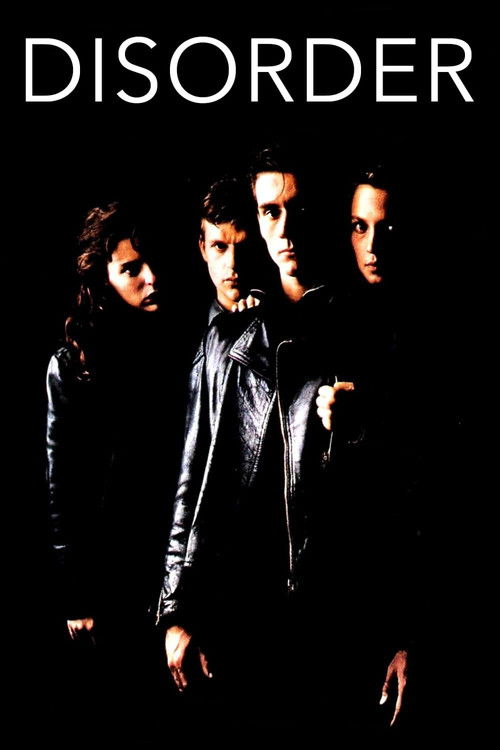
Disorder
1986
No user ratings available yet
Diversity score: 4.9 out of 10

1986
RDirector
Richard Lowenstein
Runtime
103 minutes
Average Rating
No ratings yetSynopsis
The place is Melbourne, Australia 1978. The punk phenomenon is sweeping the country and Dogs In Space, a punk group, are part of it. In a squat, in a dodgy suburb, live a ragtag collection of outcasts and don't-wanna-bes who survive on a diet of old TV space films, drugs and good music. And the satellite SKYLAB could crash through their roof at any moment...
Overall Score
Fair
Category Breakdown
LGBTQ+ Representation
The film captures the queer-coded aesthetics and fluid social behaviors of the post-punk movement. While it lacks explicit LGBTQ+ character arcs, it disrupts heteronormative expectations through non-traditional social interactions and gender expression.
Gender Representation
Women are integrated as active participants in the music and drug scenes rather than domestic roles. The film avoids traditional masculine authority tropes, focusing instead on a decentralized, chaotic peer group.
Racial & Ethnic Diversity
The cast is predominantly white, reflecting the historical specificity of the Melbourne post-punk scene. The film lacks significant racial blending or non-Anglo-Saxon agency, functioning as a localized demographic study.
Religious & Cultural Diversity
The narrative excels by replacing the nuclear family with 'chosen families' of outcasts. It embraces hedonism and nihilism, presenting anti-social behavior as subcultural rebellion rather than a moral failing.
Disability Representation
The film touches on the psychological toll of urban decay and substance use. However, these elements appear as symptoms of the environment rather than characters with specific agency or identity.
Strengths
Areas for Improvement
AI Analysis
Dogs in Space is a stylistic immersion into the Melbourne post-punk subculture, prioritizing atmosphere and rebellion over traditional moral frameworks. Its strength lies in its deconstruction of Western institutions and the celebration of non-conformist, anti-establishment lifestyles. However, the film's historical specificity limits its intersectional breadth. The focus on a specific white, localized demographic results in low scores for racial and disability representation, as these elements are either absent or treated as environmental symptoms. Ultimately, the film succeeds as a postmodern character study of outsiders. It disrupts conventional societal expectations by replacing traditional hierarchies with a decentralized, chaotic social structure.
1986

2016

1980

2008

2012

1980

2021

1982
1970

2013
1981

2017
No reviews yet. Be the first to share your thoughts on this movie!
Use the rating form above to leave a star rating and optional review.