Solo Sunny
1980
No user ratings available yet
Representation score: 5.4 out of 10
Representation Score
Fair
1981
Director
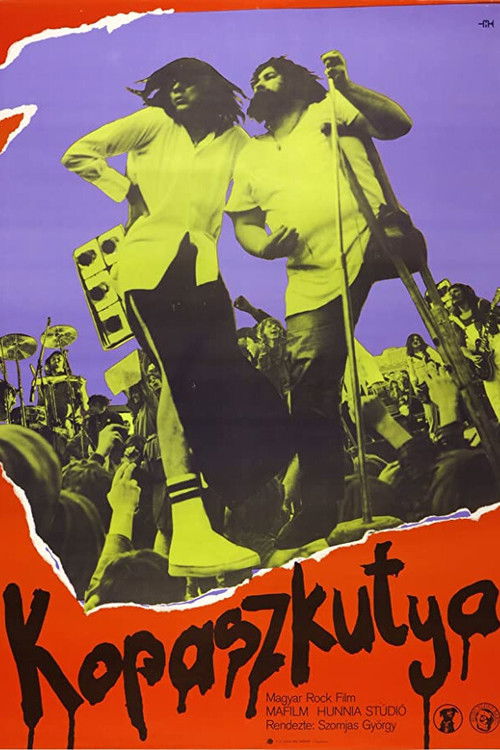
György Szomjas
Runtime
100 minutes
Average Rating
No ratings yetNew Showbiz Analysis
Bald Dog Rock is a character study of cultural authenticity and the tension between grassroots expression and institutional control. It succeeds in deconstructing the impulse to imitate foreign identities, opting instead for a localized critique of how art is mediated by dominant social institutions. However, the film's social scope is narrow. It lacks diverse representation, particularly regarding gender and LGBTQ+ identities, which limits its broader social commentary. The focus remains heavily on a male-centric musical group. Ultimately, the film's strength lies in its exploration of how music can serve as a tool for social connection and resistance against institutionalized culture.
Category Breakdown
The film does not include any explicit LGBTQ+ characters or non-straight relationships. The story focuses solely on the professional and social dynamics of a musical ensemble.
The story revolves around a male-dominated musical group. There is a noticeable lack of prominent female characters or leadership roles within the band's social structure.
The film transitions from imitating exotic American themes to embracing local, working-class authenticity. While it critiques cultural dominance, the cast remains ethnically uniform within its Hungarian setting.
The narrative challenges state-controlled media and institutional gatekeepers. It promotes grassroots cultural expression by framing the 'Kőbánya blues' as an authentic response to a stagnant system.
There is no information available regarding the depiction of physical or neurodivergent disabilities in this work.
Present on Screen
Limited or Absent
Official Synopsis
A Hungarian band plays American rock & roll and blues hits with great enthusiasm and passion, but success seems to avoid them. TV and radio don't play their songs, sometimes even their crowd just sits and sips beer. Something must be done, and the band's leader (Lóránt Schuster) comes up with the big idea: write and play songs for the people about themselves and not about some exotic, but too distant people's life. "We move from Tobacco Road to Retek street." With the remains of the band and a second singer (Gyula Deák "Bill") they find what they failed to show people before. The rich new sound can finally translate the spirit of blues and rock much more than words from any dictionaries could, this is the Kőbánya blues.
1980
1978
1983

2013
1985
2013

1983
1972
No reviews yet. Be the first to share your thoughts on this movie!
Use the rating form above to leave a star rating and optional review.