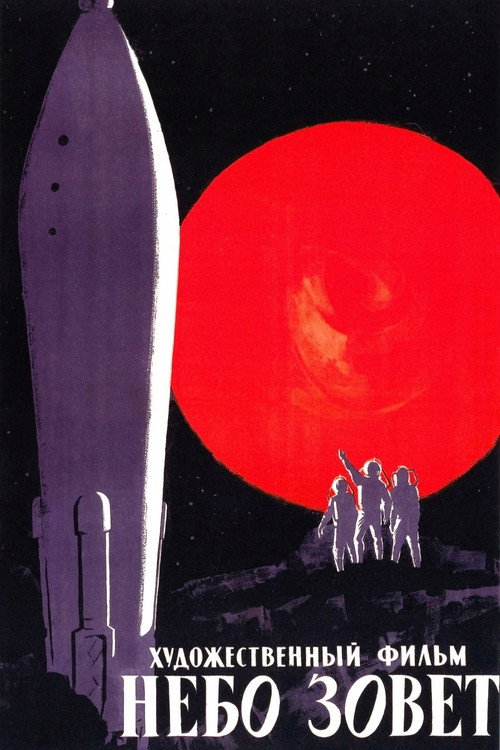
The Sky Calls
1959
No user ratings available yet
Diversity score: 3.6 out of 10
1957
NRDirector
William Asher
Runtime
75 minutes
Average Rating
No ratings yetSynopsis
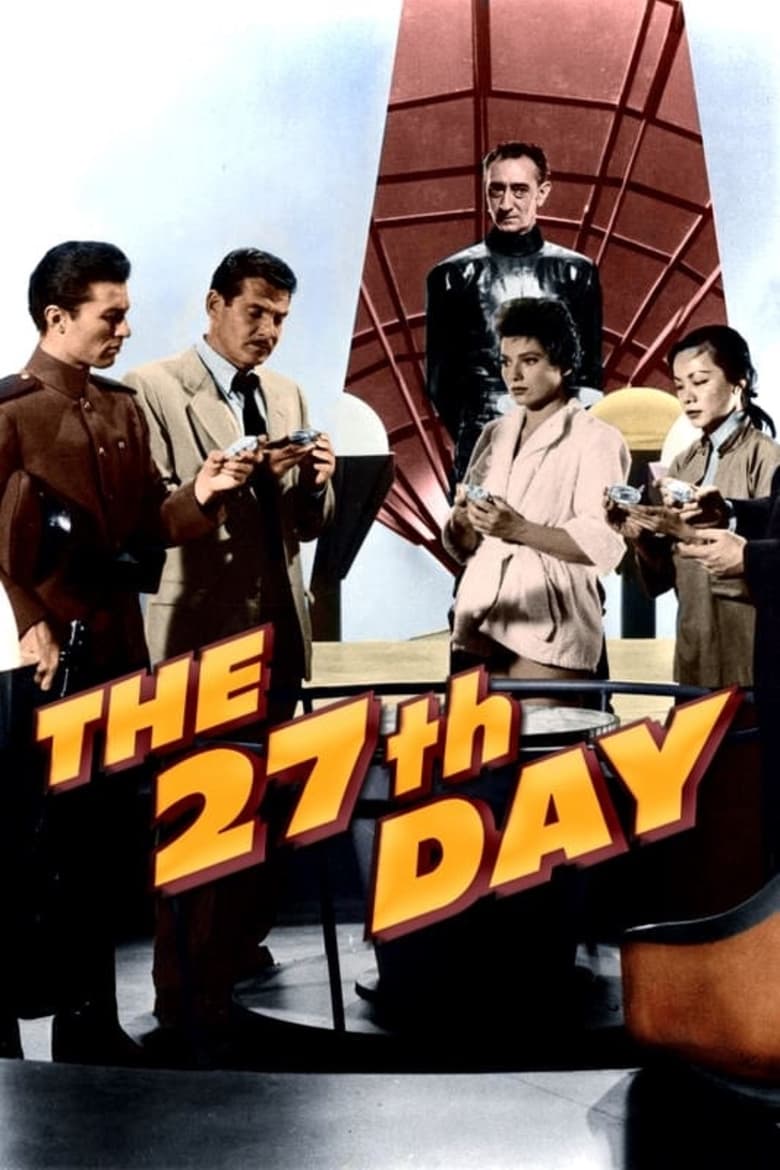
Five individuals from five nations, including the USA, USSR, and China, suddenly find themselves on an alien saucer, where an alien gives each a container holding three capsules. The alien explains that no power on earth can open a given container except a mental command from the person to whom it is given, then anyone may take a capsule and, by speaking a latitude and longitude at it, cause instant death to all within a given radius: thus each of the five has been provided with the power of life and death. Then, they are given 27 days to decide whether to use the capsules, and returned to the places from which each one came...
Overall Score
Limited
Category Breakdown
LGBTQ+ Representation
The film contains no discernible LGBTQ+ characters or non-heteronormative narrative arcs. It adheres strictly to the heteronormative social standards of the 1950s.
Gender Representation
Female characters are largely relegated to supportive or domestic roles. They lack the agency to drive the central geopolitical conflict, which remains dominated by male leadership.
Racial & Ethnic Diversity
The film features representatives from five nations, including the USA, USSR, and China. However, non-Western characters often function as geopolitical symbols rather than nuanced individuals.
Religious & Cultural Diversity
The narrative offers a secular, humanist critique of consumerism and societal collapse. It avoids religious moralities, focusing instead on the necessity of social cohesion for survival.
Disability Representation
There is no visible or invisible disability representation. No characters are depicted with physical disabilities, neurodivergence, or mental health conditions.
Strengths
Areas for Improvement
AI Analysis
The 1957 film serves as a Cold War parable that prioritizes geopolitical tension over social representation. While it attempts internationalism by including characters from various nations, the cast remains predominantly white and lacks deep characterization for non-Western figures. Gender roles are strictly traditional, with men driving the central power dynamics and women occupying domestic frameworks. The film lacks any representation of LGBTQ+ identities or disabilities, reflecting the era's limited social scope. Ultimately, the film focuses on a secular critique of human greed and consumerism. It disrupts national exceptionalism but fails to incorporate intersectional identities or subvert established social hierarchies.
1959

1972

1968
1962
1972

1982

1966

1965

1970
1953

1987

1967
No reviews yet. Be the first to share your thoughts on this movie!
Use the rating form above to leave a star rating and optional review.