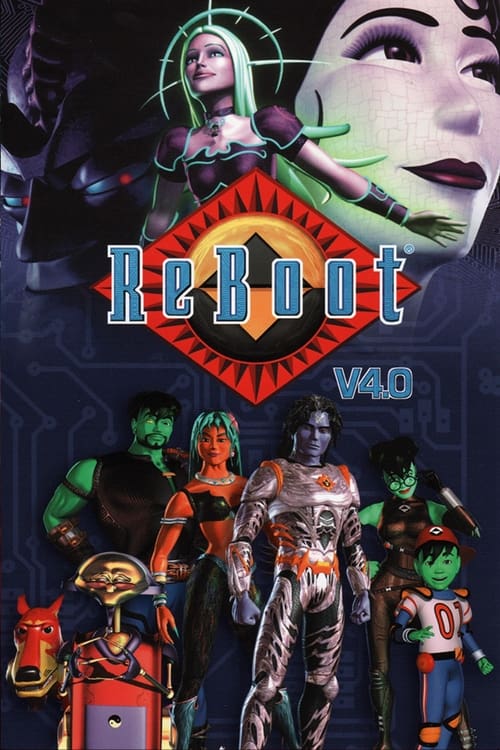
ReBoot - Daemon Rising
2001
No user ratings available yet
Diversity score: 6.2 out of 10

1997
Director
Koji Morimoto
Runtime
16 minutes
Average Rating
No ratings yetSynopsis
The film is set in the distant future in a city called Cahmpon. A scientist creates a synthetic life-form called Noiseman, which erases music from the airwaves by turning it into crystals. A group of Biker street kids rebels against this tyranny.
Overall Score
Fair
Category Breakdown
LGBTQ+ Representation
The film utilizes an abstract, non-human framework featuring insect-like entities. Consequently, there are no explicit LGBTQ+ identities or romantic narratives present within the story.
Gender Representation
By focusing on non-human entities, the film bypasses traditional gender hierarchies and social roles. However, it lacks active subversion of gendered power dynamics, resulting in a neutral omission.
Racial & Ethnic Diversity
The surreal, dreamlike animation avoids racial or ethnic tropes through a focus on form and texture. This color-blind approach prevents the reinforcement of traditional human racial hierarchies.
Religious & Cultural Diversity
The narrative favors postmodernism and sensory abstraction over religious or moral lessons. The struggle between Noise and Music suggests a critique of rigid, systemic structures.
Disability Representation
The film emphasizes sensory perception through sound and vibration. While it lacks specific portrayals of disability, it explores neurodivergent-adjacent modes of experiencing the world.
Strengths
Areas for Improvement
AI Analysis
Koji Morimoto’s work succeeds in deconstructing traditional storytelling by replacing human-centric social structures with a sensory-driven, non-linear reality. Its strength lies in its refusal to adhere to conventional hierarchies, offering a postmodern alternative to standard casting and moral models. However, the film's reliance on abstraction means it lacks high-agency representation. Because the characters are primarily non-human or sonic manifestations, the work avoids traditional pitfalls but fails to provide specific, active identities for marginalized groups.
2001
1987

2007
No reviews yet. Be the first to share your thoughts on this movie!
Use the rating form above to leave a star rating and optional review.