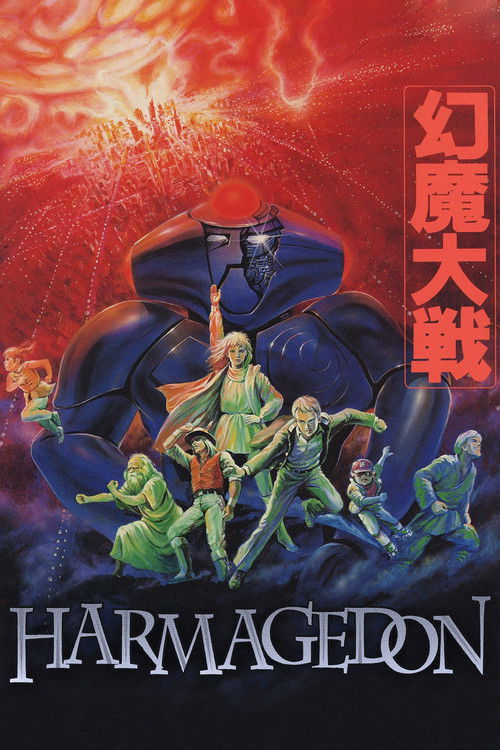
Harmagedon
1983
No user ratings available yet
Representation score: 5.3 out of 10

Representation Score
Excellent
1986
Not RatedDirector
Koichi Mashimo
Runtime
88 minutes
Average Rating
No ratings yetNew Showbiz Analysis
Love City is a dystopian science fiction film that explores themes of systemic oppression and individual autonomy through speculative biology. By focusing on 'headmeters'—people with psychokinetic powers—the film creates a narrative where biological differences are both empowering and threatening. The film avoids Western-centric clichés by setting its conflict in a futuristic Tokyo and featuring East Asian characters. It goes beyond typical action narratives by using its protagonists to critique the oppressive nature of state control and institutional corruption. While the film offers deep metaphors for neurodivergence and gender empowerment, it remains somewhat vague about specific romantic identities. However, its focus on underrepresented individuals provides a meaningful critique of traditional social hierarchies.
Category Breakdown
Kei and Ai share a strong bond that exists outside traditional heterosexual relationships. Their roles as fugitives suggest a unique identity that doesn't fit typical societal norms.
Ai breaks the damsel-in-distress stereotype by being a key driver of the plot. She has significant influence over the geopolitical events, showing she plays a major role in the story's progression.
Set in a futuristic Tokyo, the story highlights non-Western perspectives. Characters such as Mr. Lee and Lai Lo Ching bring complex East Asian identities into a high-tech, globalized world.
The film critiques centralized authority and scientific materialism. By portraying state organizations as inherently corrupt, it questions the dominance of established corporate and institutional structures.
The 'headmeters' symbolize neurodivergence and physical exceptionalism. The film portrays their psychokinetic abilities as a source of strength rather than a condition needing a cure.
Present on Screen
Limited or Absent
Official Synopsis
In a dystopic and futuristic Tokyo, humanity’s genetic code has gone awry. At the forefront of the technology is Fraud, an organization conducting experiments on people such as Kei and Ai – two escaped “headmeters” with hefty psychokinetic powers. The sinister Mr. Lee wants nothing more to retrieve Ai back to his clutches, as she seemingly holds the key to immense power; Kei wants simply to keep Ai safe; and the evil Lai Lo Ching has his own master plan. Along with the help of the amnesiac headmeter K2 and a trusty sidekick, Kei must fight to protect Ai from the evils of Mr. Lee, Lai Lo Ching, and the state of the world itself!
1983

1998

1988

1990

2001

1993

1989

1987
No reviews yet. Be the first to share your thoughts on this movie!
Use the rating form above to leave a star rating and optional review.