Believeland
2016
No user ratings available yet
Diversity score: 3.8 out of 10
2016
Director
Patrick Creadon
Runtime
102 minutes
Average Rating
No ratings yetSynopsis
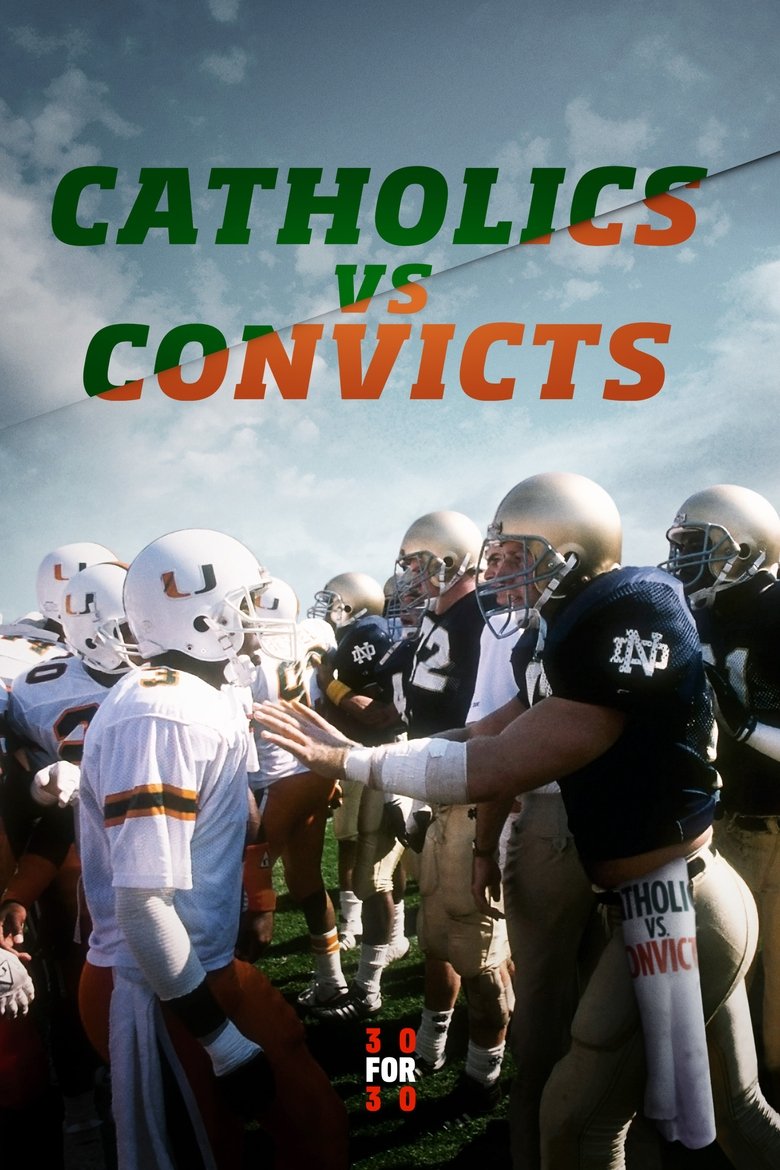
On October 15, 1988, Notre Dame hosted the University of Miami in what would become one of the greatest games in college football history. It was tradition vs. swagger, the No. 4-ranked Fighting Irish versus the No. 1-ranked Hurricanes, one coaching star, Lou Holtz, versus another, Jimmy Johnson. But the name still attached to the contest came from a t-shirt manufactured by a few Notre Dame students: “Catholics vs. Convicts.” As compelling as the tale of Notre Dame’s dramatic victory is—even losing quarterback Steve Walsh calls it “a helluva ballgame”—the backstory is just as riveting.
Overall Score
Limited
Category Breakdown
LGBTQ+ Representation
The documentary focuses on a collegiate football rivalry and lacks any evidence of LGBTQ+ characters or non-cisnormative identities. The narrative does not address heteronormativity within this sporting context.
Gender Representation
Agency resides almost exclusively with male protagonists like Lou Holtz and Jimmy Johnson. The film centers on a 1980s football environment that lacks the subversion of traditional gender hierarchies.
Racial & Ethnic Diversity
The narrative prioritizes institutional rivalry and the 'tradition vs. swagger' trope. While rosters likely reflected 1988 demographics, the film focuses more on institutional identity than racial composition.
Religious & Cultural Diversity
Tension is built on the friction between religious tradition and an 'outlaw' culture. The film celebrates a specific historical moment within an established American collegiate framework.
Disability Representation
There is no mention of subjects navigating physical, neurodivergent, or mental health conditions. The narrative does not include disability-related storylines.
Strengths
Areas for Improvement
AI Analysis
This documentary functions as a traditional sports chronicle, prioritizing historical preservation and athletic achievement. It centers on the 1988 rivalry between Notre Dame and the University of Miami, focusing on the clash of institutional identities. The narrative architecture is designed to celebrate a specific cultural moment in American sports history. Consequently, it does not seek to challenge systemic structures or explore intersectional identities. Because the film adheres to the established frameworks of 1980s collegiate football, it lacks representation of diverse social identities, focusing instead on the personalities of coaches and players.
2016

2015

2013
2003
2016
2009
2010
2022
2017

2017
2004
2015
No reviews yet. Be the first to share your thoughts on this movie!
Use the rating form above to leave a star rating and optional review.